
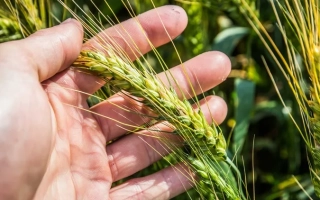

SKU #37002
·
32 views
Mirhaid
Wheat
User rating
0 votes0% positive reviews
No ratings yet — be the first.
Wheat Type
Soft wheat variety
Resistance to lodging
Good
Registration year
2000
About product

A reliable soft wheat variety with powerful immunity and high lodging resistance.
Wheat Type
Soft wheat variety
Resistance to lodging
Good
Registration year
2000
Description
Field Reliability: A Strategic Choice
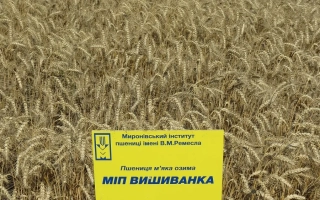
When selecting a winter wheat variety for intensive farming, the priority isn't just yield potential—it's loss prevention. The 'Mirkhad' soft wheat variety, developed by the V.M. Remeslo Myronivka Institute of Wheat, is a prime example of genetics acting as an insurance policy against the common challenges faced in Ukrainian fields. For an agronomist, this variety is highly predictable; it doesn't demand complex management, which streamlines your fungicide application schedule significantly.
A Robust Phytosanitary Shield
Mirkhad stands out for its resilience. It features built-in genetic resistance to key pathogens that typically erode profit margins throughout the season:
- Rusts and Spotting: Superior resistance to brown rust and various leaf spot diseases (including Mycosphaerella and brown spots) allows you to reduce the frequency of chemical spray cycles.
- Root and Fusarium Risks: The variety shows excellent resistance to root rots, which is crucial when planting in crop rotations with a high infection pressure.
- Powdery Mildew: Its inherent immunity keeps the leaf canopy healthy even during periods of high humidity.
Operational Performance
In the field, Mirkhad behaves with remarkable discipline. Its standout feature is its high lodging resistance. This provides peace of mind when applying intensive nitrogen fertilization—the straw is strong enough to handle high nutrition levels without falling over before harvest. Your harvest crew will appreciate it, too: a uniform stand allows for faster combine speed with minimal loss, and the grain's excellent threshability puts less stress on the combine's cleaning system. Ultimately, Mirkhad is about consistency. You invest in the technology, and the variety converts those inputs into a robust yield, well-protected against most agricultural surprises.
Crop & resistance
Crop
Disease resistance
Specifications hover over for a hint about the specification
|
Wheat Type
Wheat Type
Biologically hard wheat differs from soft wheat in its greater demand for soil fertility and agronomic conditions (especially regarding field cleanliness from weeds), lower drought resistance and plasticity, relatively weaker root development, especially nodal roots, and lower ti... |
|
|---|---|
| Resistance to lodging | |
| Registration year | 2000 |
| Catalog | Catalog → Wheat |
| Legal data |
Show · 1
|
| Country | Ukraine |
Store offers
Prices are updated on loadLoading offers…
Aggregator catalog: prices are collected automatically from store websites, normalized by AI and converted at the current exchange rate. Before ordering, confirm the price and availability on the store's website. This block is not indexed by search engines — the data is loaded after the page opens.
Not yet комментариев. Be the first!
Alternatives
Wheat seeds · similar varieties




See also
Often considered together with this variety




Recently viewed
Products you’ve viewed on this site
Reviews · 0