


SKU #73231
·
59 views
Sweetclover Volga
Sweet Clover
Prices in stores
No offers yet — stores have not added prices for this product yet.
Similar varieties with prices
-
ZAVOLZHSKIY
from 215.43 €per 1 kg
-
 SOLNYSHKO
from 4.87 €per 1 kg
SOLNYSHKO
from 4.87 €per 1 kg
-
 Yantar
from 5.93 €per 1 kg
Yantar
from 5.93 €per 1 kg
-
 SAYANSKY
from 5.78 €per 1 kg
SAYANSKY
from 5.78 €per 1 kg
Type
White sweet clover
Vegetation Period
80–120
Plant Height
150–200
Weight of 1000 seeds, g
2.2–2.6
Your mark
0 votes
0% positive ratings
Description
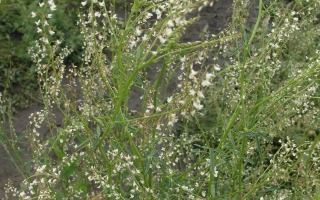
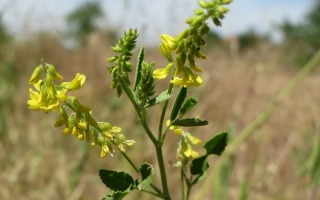
The white clover 'Volga' variety – an annual plant with a compact bush and upright stem 140–180 cm high. The root system is characterized by a taproot, thickened at the top, which penetrates deep into the soil up to 1.5–2 m, ensuring drought resistance and promoting nitrogen accumulation due to the presence of root nodule bacteria.
'Volga' develops successfully on a wide range of soils: light sandy, chernozem, calcareous, and saline. It exhibits good salt tolerance and drought resistance, making it suitable for cultivation in various climatic conditions. When ploughed in, the plant releases a significant amount of nitrogen – up to 150–200 kg per hectare, equivalent to approximately 50–60 tons of manure.
The vegetative period lasts 100–120 days. Green mass yield reaches 25–37 tons per hectare, and seed yield – from 0.2 to 0.6 tons per hectare. Seeds are oval, light yellow, about 2.5 mm long and 2 mm wide; the weight of 1000 pods is 3 g, and 1000 seeds – 2.2–2.8 g. Hardseededness is around 4–5%. The variety is also resistant to powdery mildew and is characterized by good dry matter yield (about 58 c/ha).
'Volga' develops successfully on a wide range of soils: light sandy, chernozem, calcareous, and saline. It exhibits good salt tolerance and drought resistance, making it suitable for cultivation in various climatic conditions. When ploughed in, the plant releases a significant amount of nitrogen – up to 150–200 kg per hectare, equivalent to approximately 50–60 tons of manure.
The vegetative period lasts 100–120 days. Green mass yield reaches 25–37 tons per hectare, and seed yield – from 0.2 to 0.6 tons per hectare. Seeds are oval, light yellow, about 2.5 mm long and 2 mm wide; the weight of 1000 pods is 3 g, and 1000 seeds – 2.2–2.8 g. Hardseededness is around 4–5%. The variety is also resistant to powdery mildew and is characterized by good dry matter yield (about 58 c/ha).
Crop & resistance
Crop
Disease resistance
Specifications
| Type | |
|---|---|
| Vegetation Period | 80–120 |
| Plant Height | 150–200 |
| Weight of 1000 seeds, g | 2.2–2.6 |
| Registration year | 1998 |
| Catalog | Catalog → Sweet Clover |
| Legal data |
Show · 6
|
| Country | Russia |
No reviews yet. Be the first to share your experience.
Alternatives
Sweet Clover · similar varieties




See also
Often considered together with this variety







Recently viewed
Products you’ve viewed on this site
Reviews