


SKU #60905
·
31 views
Semerka
Sugar Beet
AURORA S.P.A.User rating
0 votes0% positive reviews
No ratings yet — be the first.
Direction Type
Yield Type (E)
Recommended Density
90-100 thousand pcs/ha
Registration year
2016
About product

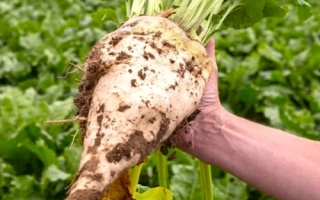
A high-yield Italian sugar beet hybrid optimized for consistent root biomass production.
Direction Type
Yield Type (E)
Recommended Density
90-100 thousand pcs/ha
Registration year
2016
Description
Prioritizing Yield: The Aurora S.P.A «Semerka» Approach
For large-scale sugar beet production, success lies in the balance between root mass and consistent field performance. The «Semerka» hybrid, developed by the Italian originator Aurora S.P.A, is a classic E-type (high-yield) sugar beet designed to maximize tonnage. Unlike specialized high-sugar types, this hybrid focuses on steady biomass accumulation, making it a reliable workhorse for intensive agricultural systems.
Technical Specifications and Optimal Density
Success with «Semerka» is largely determined by precision in seed rate. The recommended density is 90,000–100,000 plants per hectare. Sticking to this range is crucial; the Italian genetics of Aurora S.P.A are tuned to this density to prevent inter-plant competition while ensuring individual root development stays within ideal harvest parameters.
Strengths and Ideal Use Cases
- High Tonnage Focus: Ideal for producers whose contracts or processing facilities reward total biomass rather than extreme sugar concentrations.
- Consistent Growth: The hybrid demonstrates predictable development, reducing the management risks associated with more temperamental, high-sugar varieties.
- Italian Selection Advantage: Benefits from modern breeding practices that prioritize structural integrity and yield stability across various European soil types.
The main advantage of «Semerka» is its reliability. It performs best in soils with high fertility, where its genetic potential for weight gain can be fully realized. However, it is an intensive-type hybrid; it requires proper nutrition and a solid agronomic plan to reach its peak. It is not designed for poor, nutrient-depleted soils. For those managing well-structured, irrigated, or high-potential land, «Semerka» offers a straightforward, high-reward pathway to meeting production quotas.
Crop & resistance
Crop
Specifications hover over for a hint about the specification
| Direction Type | |
|---|---|
|
Recommended Density
Recommended Density
Optimal productivity is achieved at a planting density of 4000-5500 plants/ha. Possible planting scheme: 300-500x40-80 cm. |
90-100 thousand pcs/ha |
| Registration year | 2016 |
| Catalog | Catalog → Sugar Beet |
| Manufacturer | AURORA S.P.A. |
| Country | Italy |
Store offers
Prices are updated on loadLoading offers…
Aggregator catalog: prices are collected automatically from store websites, normalized by AI and converted at the current exchange rate. Before ordering, confirm the price and availability on the store's website. This block is not indexed by search engines — the data is loaded after the page opens.
Not yet комментариев. Be the first!
Alternatives
Sugar beet seeds · similar varieties





See also
Often considered together with this variety




Recently viewed
Products you’ve viewed on this site
Reviews · 0