


SKU #43359
·
41 views
MALUS
Sugar Beet
STRUBEUser rating
0 votes0% positive reviews
No ratings yet — be the first.
Direction Type
Normal-Yield Type (NE)
Root vegetable; size
Large
Root; shape
Round
Sugar Content
19-20%
About product

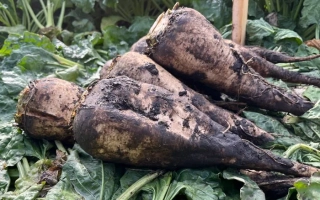
High-performance hybrid offering an ideal balance of sugar content and robust resistance to root rot.
Direction Type
Normal-Yield Type (NE)
Root vegetable; size
Large
Root; shape
Round
Sugar Content
19-20%
Description
Genetic Potential and Protection
The Malus sugar beet hybrid from Strube is a classic normal-yield (NE) type, focusing on the synergy between root weight and sugar content. The hybrid's selection strategy addresses both soil-borne and airborne pathogens. Technically, this translates to high metabolic plant activity, allowing for the effective suppression of rhizomania and cercospora, even under high disease pressure environments.
Adaptability and Phytosanitary Properties
A key advantage of this hybrid is its segment-leading resistance to Aphanomyces root rot. In intensive farming systems, where crop rotation is often sugar beet-heavy, this trait is a critical survival factor during early growth stages. This comprehensive protection is reinforced by resistance to powdery mildew and various types of rot, significantly reducing the need for intensive fungicide applications.
Agronomic Characteristics
- Shape and Geometry: The round root shape ensures optimal soil space utilization, which simplifies mechanical harvesting processes and minimizes harvest losses during lifting.
- Sugar Concentration: A content of 19–20% positions this hybrid in the premium segment, ensuring high profitability for raw material processing.
- Sowing Recommendations: The recommended stand density is 90,000–100,000 plants per hectare. Adhering to this range allows the plant to reach its full genetic yield potential without compromising sugar quality due to nutrient competition.
Crop & resistance
Crop
Disease resistance
Specifications hover over for a hint about the specification
| Direction Type | |
|---|---|
| Root vegetable; size | |
|
Root; shape
Root; shape
Roots can be round, elongated-round, cylindrical, conical. |
|
| Sugar Content | 19-20% |
|
Recommended Density
Recommended Density
Optimal productivity is achieved at a planting density of 4000-5500 plants/ha. Possible planting scheme: 300-500x40-80 cm. |
90-100 thousand pcs/ha |
| Registration year | 2015 |
| Catalog | Catalog → Sugar Beet |
| Manufacturer | STRUBE |
| Legal data |
Show · 1
|
| Country | Germany |
Store offers
Prices are updated on loadLoading offers…
Aggregator catalog: prices are collected automatically from store websites, normalized by AI and converted at the current exchange rate. Before ordering, confirm the price and availability on the store's website. This block is not indexed by search engines — the data is loaded after the page opens.
Not yet комментариев. Be the first!
Alternatives
Sugar beet seeds · similar varieties





See also
Often considered together with this variety





Recently viewed
Products you’ve viewed on this site
Reviews · 0