


SKU #52515
·
65 views
Sugar
Potato
ФГБНУ Уральский федеральный аграрный научно-исследовательский центр Уральского отделения Российской академии наукUser rating
0 votes0% positive reviews
No ratings yet — be the first.
Direction
Table Potato
Corm; shape
Oval
Corm; skin color
Light yellow (white)
Corm; flesh color
Yellow
About product

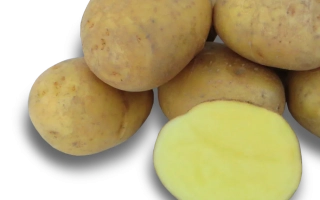
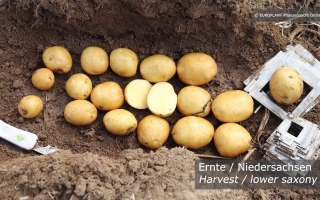
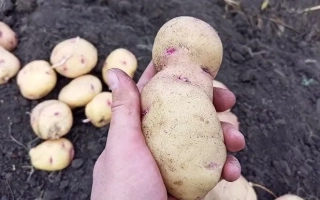
Potato variety Sugar is a medium-maturing table variety with oval, light beige tubers and small eyes. The flesh is yellow, containing about 17% starch, which ensures good taste qualities. The weight of marketable tubers ranges from 91 to 123 grams, and marketability reaches 82%, indicating high crop quality. The plant is of medium height, intermediate type with semi-erect form, medium-sized green…
Direction
Table Potato
Corm; shape
Oval
Corm; skin color
Light yellow (white)
Corm; flesh color
Yellow
Description
Potato variety Sugar is a medium-maturing table variety with oval, light beige tubers and small eyes. The flesh is yellow, containing about 17% starch, which ensures good taste qualities. The weight of marketable tubers ranges from 91 to 123 grams, and marketability reaches 82%, indicating high crop quality. The plant is of medium height, intermediate type with semi-erect form, medium-sized green leaves, and medium-sized flowers without or with very weak anthocyanin coloring on the inner side.
The variety is characterized by high yield and resistance to several diseases. Marketable yield ranges from 119 to 241 centners per hectare, with maximum yield reaching 470 centners per hectare, corresponding to the level of top standards. Sugar is resistant to potato late blight pathogen and golden potato cyst nematode, but susceptible to phytophthora on stems and tubers, as well as to crinkly mosaic and leaf curl. Additionally, the variety is adapted for irrigated conditions in steppe zones and possesses high agro-ecological plasticity.
In addition to high productivity, the variety is characterized by good storability (94%) and increased dry matter content (about 22.9%), which contributes to long-term storage and maintenance of marketable qualities. Taste qualities are highly rated, making Sugar potato attractive for table use. Due to its combination of resistance to major pathogens, high yield, and quality characteristics, this variety is a promising choice for cultivation in various regions.
The variety is characterized by high yield and resistance to several diseases. Marketable yield ranges from 119 to 241 centners per hectare, with maximum yield reaching 470 centners per hectare, corresponding to the level of top standards. Sugar is resistant to potato late blight pathogen and golden potato cyst nematode, but susceptible to phytophthora on stems and tubers, as well as to crinkly mosaic and leaf curl. Additionally, the variety is adapted for irrigated conditions in steppe zones and possesses high agro-ecological plasticity.
In addition to high productivity, the variety is characterized by good storability (94%) and increased dry matter content (about 22.9%), which contributes to long-term storage and maintenance of marketable qualities. Taste qualities are highly rated, making Sugar potato attractive for table use. Due to its combination of resistance to major pathogens, high yield, and quality characteristics, this variety is a promising choice for cultivation in various regions.
Crop & resistance
Crop
Disease resistance
Pest resistance
Specifications hover over for a hint about the specification
|
Direction
Direction
Existing varieties and types of cabbage are grown for fresh consumption, long-term storage, and technical processing. |
|
|---|---|
| Corm; shape | |
| Corm; skin color | |
| Corm; flesh color | |
| Cormorant; eye depth | |
| Corm; mass | 50-130 grams |
| Dry Matter Content | 22-23% |
| Starch Content | 17-18% |
| Flavor Characteristics | |
| Registration year | 2020 |
| Catalog | Catalog → Potato |
| Manufacturer | ФГБНУ Уральский федеральный аграрный научно-исследовательский центр Уральского отделения Российской академии наук |
| Legal data |
Show · 1 |
| Country | Russia |
Store offers
Prices are updated on loadLoading offers…
Available at: purple-potatoesru
Aggregator catalog: prices are collected automatically from store websites, normalized by AI and converted at the current exchange rate. Before ordering, confirm the price and availability on the store's website. This block is not indexed by search engines — the data is loaded after the page opens.
Not yet комментариев. Be the first!
Alternatives
Seed potatoes · similar varieties







See also
Often considered together with this variety





Recently viewed
Products you’ve viewed on this site
Reviews · 0