


SKU #66413
·
55 views
SABANTUY
Sorghum
Agroplazma LTD.User rating
0 votes0% positive reviews
No ratings yet — be the first.
Direction
Hay, Silage
Grain; Protein Content
10-11%, 11-12%
Plant; height
180-200cm
Registration year
2009
Prices in stores
from0.74 €per 1 kg
pack from 0.74 € per 1 kg
2 offers from 2 stores
Store offers · 2 from 2 stores
Prices are updated on loadLoading offers…
Available at: Агрору · RegTorg
Aggregator catalog: prices are collected automatically from store websites, normalized by AI and converted at the current exchange rate. Before ordering, confirm the price and availability on the store's website. This block is not indexed by search engines — the data is loaded after the page opens.
About product

Sabantuy — a medium-ripening hybrid of the sorghum-sudan type (Sorghum x drummondii), intended for use as green fodder, hay, silage, and grazing. The plant is characterized by high green mass yield, reaching 40–80 tons per hectare, as well as high protein (9–13%) and sugar content, making it a valuable feed resource. The hybrid is distinguished by drought and lodging resistance, ensuring stable de…
Direction
Hay, Silage
Grain; Protein Content
10-11%, 11-12%
Plant; height
180-200cm
Registration year
2009
Description
Sabantuy — a medium-ripening hybrid of the sorghum-sudan type (Sorghum x drummondii), intended for use as green fodder, hay, silage, and grazing. The plant is characterized by high green mass yield, reaching 40–80 tons per hectare, as well as high protein (9–13%) and sugar content, making it a valuable feed resource. The hybrid is distinguished by drought and lodging resistance, ensuring stable development and high productivity even under unfavorable conditions. Moreover, Sabantuy is weakly affected by bacterial leaf spot and grasshoppers, which reduces the need for intensive plant protection.
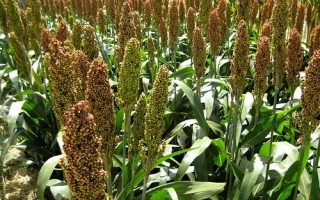
The plant has a tall, erect, and highly bushy bush with a long stem and a large number of leaves of medium length and width. Flowering occurs early; the panicle is wide at the lower part and erect, and the glumes turn brown upon ripening. Seeds are elliptical, brown, with a mass of 100,000 seeds ranging from 21.8 to 24.1 grams. Thanks to its morphology and biological features, the hybrid can produce up to three cuts per season, significantly increasing the total volume of fodder mass.
Sabantuy is successfully grown on various soils and is recommended for the regions of the North Caucasus, Lower Volga, Central Volga, Central Chernozem, Ural, and Western Siberia. Dry matter yield in these regions reaches high levels — up to 99 c/ha in the North Caucasus and 77.6 c/ha in the Central Volga. Low soil requirements and high resistance to unfavorable factors make this hybrid attractive for farmers seeking high-quality and stable feed for animals.
The plant has a tall, erect, and highly bushy bush with a long stem and a large number of leaves of medium length and width. Flowering occurs early; the panicle is wide at the lower part and erect, and the glumes turn brown upon ripening. Seeds are elliptical, brown, with a mass of 100,000 seeds ranging from 21.8 to 24.1 grams. Thanks to its morphology and biological features, the hybrid can produce up to three cuts per season, significantly increasing the total volume of fodder mass.
Sabantuy is successfully grown on various soils and is recommended for the regions of the North Caucasus, Lower Volga, Central Volga, Central Chernozem, Ural, and Western Siberia. Dry matter yield in these regions reaches high levels — up to 99 c/ha in the North Caucasus and 77.6 c/ha in the Central Volga. Low soil requirements and high resistance to unfavorable factors make this hybrid attractive for farmers seeking high-quality and stable feed for animals.
Crop & resistance
Crop
Disease resistance
Pest resistance
Specifications hover over for a hint about the specification
|
Direction
Direction
Existing varieties and types of cabbage are grown for fresh consumption, long-term storage, and technical processing. |
|
|---|---|
| Grain; Protein Content | 10-11%, 11-12% |
| Plant; height | 180-200cm |
| Registration year | 2009 |
| Catalog | Catalog → Sorghum |
| Manufacturer | Agroplazma LTD. |
| Legal data |
Show · 1 |
| Country | Russia |
Not yet комментариев. Be the first!
Alternatives
Sorghum seeds · similar varieties




See also
Often considered together with this variety






Recently viewed
Products you’ve viewed on this site
Reviews · 0