


SKU #66280
·
37 views
Ros
Sorghum
User rating
0 votes0% positive reviews
No ratings yet — be the first.
Direction
Hay, Silage
Vegetation Period
120-130 days
Registration year
2012
About product

A reliable Russian sorghum variety engineered for high-yield silage and hay production.
Direction
Hay, Silage
Vegetation Period
120-130 days
Registration year
2012
Description
Sorghum «Ros»: A Robust Solution for Forage Production
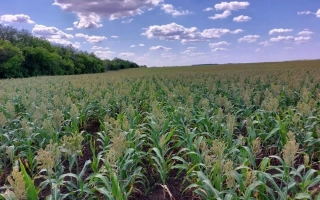
In the landscape of industrial forage production, the «Ros» variety, developed by the Samara Federal Research Center of the RAS, represents a reliable option for farmers focused on green mass yield rather than grain output. As a specialized forage crop, it has carved out a niche for itself by offering consistency in the production of high-quality silage and hay.
Breeding Profile and Practical Application
With a vegetation period of 120–130 days, «Ros» is optimized for regions where the objective is to maximize biomass accumulation. By focusing on vegetative development, the breeders have created a plant that maintains nutrient density, making it an excellent choice for dairy and livestock operations.
- Disease and Pest Resistance: A key feature of this variety is its genetic resilience to smut (head smut), a significant challenge in sorghum cultivation. Furthermore, the crop exhibits notable resistance to the frit fly, allowing for a reduction in intensive chemical pest management early in the growing season.
- Operational Versatility: The variety is strictly dedicated to silage and hay applications. Its structure ensures optimal digestibility and fermentation properties, which are essential for high-quality feed storage.
«Ros» is recognized for its stable performance across varying soil conditions. Rather than targeting aggressive, short-term intensive growth, this variety emphasizes agricultural reliability, providing farmers with a predictable supply of forage even under fluctuating weather patterns common in its region of origin.
Crop & resistance
Crop
Disease resistance
Pest resistance
Specifications hover over for a hint about the specification
|
Direction
Direction
Existing varieties and types of cabbage are grown for fresh consumption, long-term storage, and technical processing. |
|
|---|---|
| Vegetation Period | 120-130 days |
| Registration year | 2012 |
| Catalog | Catalog → Sorghum |
| Legal data |
Show · 2
|
| Country | Russia |
Store offers
Prices are updated on loadLoading offers…
Aggregator catalog: prices are collected automatically from store websites, normalized by AI and converted at the current exchange rate. Before ordering, confirm the price and availability on the store's website. This block is not indexed by search engines — the data is loaded after the page opens.
Not yet комментариев. Be the first!
Alternatives
Sorghum seeds · similar varieties



See also
Often considered together with this variety






Recently viewed
Products you’ve viewed on this site
Reviews · 0