

SKU #66350
·
39 views
Sorghum Yarik
Sorghum
North Caucasian FARCUser rating
0 votes0% positive reviews
No ratings yet — be the first.
Direction
Hay, Silage
Vegetation Period
120-130 days
Registration year
2017
About product
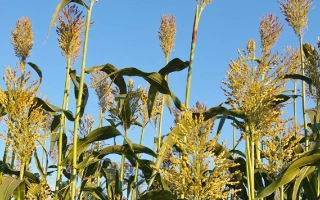
The sugar sorghum hybrid Yarik is a mid-late variety intended for use as green fodder and silage. It is characterized by weak anthocyanin pigmentation of the seedlings and medium intensity of green leaf coloration. The green mass contains 6.8% protein, 14.3% fiber, 4.5% ash, and 3.0% fat, while the sugar content in the stem juice varies from 11.4% to 14.9%. The plant's foliage coverage is 40.4%, w…
Direction
Hay, Silage
Vegetation Period
120-130 days
Registration year
2017
Description
The sugar sorghum hybrid Yarik is a mid-late variety intended for use as green fodder and silage. It is characterized by weak anthocyanin pigmentation of the seedlings and medium intensity of green leaf coloration. The green mass contains 6.8% protein, 14.3% fiber, 4.5% ash, and 3.0% fat, while the sugar content in the stem juice varies from 11.4% to 14.9%. The plant's foliage coverage is 40.4%, which promotes good development and high yield. In the Lower Volga region, the hybrid showed a yield increase of 17.6%, with the average yield of green matter adjusted for dry matter reaching 106.2 c/ha, and the maximum yield reaching 226.1 c/ha. The hybrid regenerates well after mowing, which allows it to be used in various growth phases, including the full tillering and beginning of heading phases.
The Yarik hybrid is highly competitive and capable of growing successfully in both pure stands and multi-component mixtures, especially when combined with corn. This allows for significantly increased fodder yields and improved quality. Thanks to its powerful and deep root system, penetrating up to 2.5 meters, Yarik contributes to reducing soil density throughout the profile, making it promising for use in adaptive agriculture and phytomelioration technologies. The hybrid is well adapted to the conditions of dryland and irrigated agriculture, which is particularly important for regions with water deficits and high temperatures, such as southern Russia.
In general, sorghum is one of the most heat- and drought-resistant crops in the world, widely grown on dry and semi-arid lands. It is capable of 'dying down' under unfavorable conditions, ensuring its survival and stable productivity. In addition to fodder use, sorghum is used in the food and technical industries, including the production of compound feeds, flour, alcohol, biogas, and other products. Growing sorghum contributes to reducing soil salinity and restoring their fertility, making this crop economically viable and environmentally beneficial.
The Yarik hybrid is highly competitive and capable of growing successfully in both pure stands and multi-component mixtures, especially when combined with corn. This allows for significantly increased fodder yields and improved quality. Thanks to its powerful and deep root system, penetrating up to 2.5 meters, Yarik contributes to reducing soil density throughout the profile, making it promising for use in adaptive agriculture and phytomelioration technologies. The hybrid is well adapted to the conditions of dryland and irrigated agriculture, which is particularly important for regions with water deficits and high temperatures, such as southern Russia.
In general, sorghum is one of the most heat- and drought-resistant crops in the world, widely grown on dry and semi-arid lands. It is capable of 'dying down' under unfavorable conditions, ensuring its survival and stable productivity. In addition to fodder use, sorghum is used in the food and technical industries, including the production of compound feeds, flour, alcohol, biogas, and other products. Growing sorghum contributes to reducing soil salinity and restoring their fertility, making this crop economically viable and environmentally beneficial.
Crop & resistance
Crop
Specifications hover over for a hint about the specification
|
Direction
Direction
Existing varieties and types of cabbage are grown for fresh consumption, long-term storage, and technical processing. |
|
|---|---|
| Vegetation Period | 120-130 days |
| Registration year | 2017 |
| Catalog | Catalog → Sorghum |
| Manufacturer | North Caucasian FARC |
| Legal data |
Show · 7
|
| Country | Russia |
Store offers
Prices are updated on loadLoading offers…
Aggregator catalog: prices are collected automatically from store websites, normalized by AI and converted at the current exchange rate. Before ordering, confirm the price and availability on the store's website. This block is not indexed by search engines — the data is loaded after the page opens.
Not yet комментариев. Be the first!
Alternatives
Sorghum seeds · similar varieties


See also
Often considered together with this variety




Recently viewed
Products you’ve viewed on this site
Reviews · 0