


SKU #66284
·
27 views
Stingg
Sorghum
RAGTUser rating
0 votes0% positive reviews
No ratings yet — be the first.
Direction
Grain
Vegetation Period
90-100 days
Grain; Color
White, Light Brown
Plant; height
100-110cm
About product

STINGG is a medium-early sorghum hybrid intended for cultivation in the North Caucasus and Lower Volga regions. The plant is characterized by medium height with green seedlings and leaves; the midrib of the leaf is lighter than the main leaf color. The panicle is symmetrical, dense, and of medium length, with a medium-length neck. At maturity, the glumes are light brown or reddish-brown, and the s…
Direction
Grain
Vegetation Period
90-100 days
Grain; Color
White, Light Brown
Plant; height
100-110cm
Description
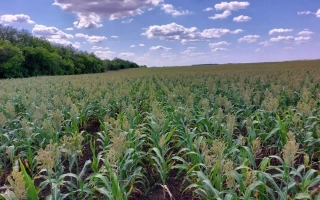
STINGG is a medium-early sorghum hybrid intended for cultivation in the North Caucasus and Lower Volga regions. The plant is characterized by medium height with green seedlings and leaves; the midrib of the leaf is lighter than the main leaf color. The panicle is symmetrical, dense, and of medium length, with a medium-length neck. At maturity, the glumes are light brown or reddish-brown, and the stigmas are light yellow or lack distinct coloration. The grain is elliptical, rounded on the back, white or light brown, with an endosperm that is 3/4 vitreous or starchy. STINGG yield varies by region: in the North Caucasus region, the average yield is about 31 c/ha, which is 3.5 c/ha higher than the standard average, while in the Lower Volga region it is 16 c/ha, also exceeding the standard average. The maximum yield recorded at the Stavropol State Station of Agricultural Science (SGIS) reached 77.3 c/ha. The variety exhibits high resistance to lodging and medium to above-average drought tolerance, making it a reliable choice for cultivation under limited moisture conditions. The plant is weakly affected by bacterial speck disease, and grass aphids cause moderate damage. STINGG is primarily used for grain production, making it in demand in agriculture for feed and food product manufacturing. Due to its agronomic characteristics and resistance to adverse conditions, this sorghum variety is an effective solution for farmers seeking stable and high yields in various climatic zones.
Crop & resistance
Crop
Disease resistance
Pest resistance
Specifications hover over for a hint about the specification
|
Direction
Direction
Existing varieties and types of cabbage are grown for fresh consumption, long-term storage, and technical processing. |
|
|---|---|
| Vegetation Period | 90-100 days |
| Grain; Color | |
| Plant; height | 100-110cm |
| Registration year | 2013 |
| Catalog | Catalog → Sorghum |
| Manufacturer | RAGT |
| Legal data |
Show · 3
|
| Country | France |
Store offers
Prices are updated on loadLoading offers…
Aggregator catalog: prices are collected automatically from store websites, normalized by AI and converted at the current exchange rate. Before ordering, confirm the price and availability on the store's website. This block is not indexed by search engines — the data is loaded after the page opens.
Not yet комментариев. Be the first!
Alternatives
Sorghum seeds · similar varieties




See also
Often considered together with this variety





Recently viewed
Products you’ve viewed on this site
Reviews · 0