

SKU #46638
·
53 views
Sorghum Mamont
Sorghum
Prices in stores
No offers yet — stores have not added prices for this product yet.
Similar varieties with prices
-
SS 506Syngenta
from 7.7 €per 1 kg
-
 MohawkPeter Bohdan Chykaliuk
from 4.02 €per 1 kg
MohawkPeter Bohdan Chykaliuk
from 4.02 €per 1 kg
-
 Sugarcane 1
from 180 €
Sugarcane 1
from 180 €
-
 SEVEROKAVKAZSKY 5
from 3.86 €per 1 kg
SEVEROKAVKAZSKY 5
from 3.86 €per 1 kg
Direction
Silage
Vegetation Period
120-130 days
Plant: height
180-200cm
Registration year
2015
Your mark
0 votes
0% positive ratings
Description
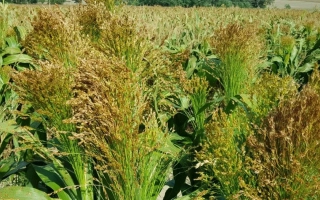
The sugar sorghum hybrid 'Mammoth' is characterized by high productivity and is adapted to the conditions of insufficient moisture in the eastern forest-steppe of Ukraine. Studies have shown that the green biomass yield of this hybrid reaches 91.5 t/ha, significantly exceeding the yield of the 'Silosne 42' variety. The hybrid 'Mammoth' also features high sugar content in juice (12.7%) and dry matter (24.6%), while the content of ash elements in biomass is lower than in the comparable variety. The optimal sowing period for maximum yield is from the end of April to the beginning of May, and biomass harvesting is recommended in the stage of full seed maturity, starting from September. The effect of harvest timing on the quality and quantity of the product was significant: harvesting in the waxy ripening stage increases green mass yield by 9.5% and sugar content in juice by 1.8 times compared to the panicle emergence stage. Extending the vegetation period contributes to increased dry matter content and reduced ash content, positively affecting the quality of raw material for further processing. Meanwhile, variety characteristics, sowing dates, and weather conditions exert different influences on yield and biomass quality indicators, with harvest timing being the dominant factor for sugar content. Studies also revealed that increasing the seeding rate of the 'Mammoth' hybrid to 200,000 plants per hectare promotes increased plant height, leaf surface area, and green mass yield, reaching 109.9 t/ha. The optimal plant density for maximum productivity is 150–200,000 plants per hectare. Higher planting density increases the yield of solid biomass and bioethanol, making the 'Mammoth' hybrid promising for use in bioenergy. However, higher density reduces stem diameter and branching coefficient, which should be considered in agronomic planning.
Crop & resistance
Crop
Specifications
| Direction | |
|---|---|
| Vegetation Period | 120-130 days |
| Plant: height | 180-200cm |
| Registration year | 2015 |
| Catalog | Catalog → Sorghum |
| Legal data |
Show · 1
|
| Country | Ukraine |
No reviews yet. Be the first to share your experience.
Alternatives
Sorghum seeds · similar varieties


See also
Often considered together with this variety




Recently viewed
Products you’ve viewed on this site
Reviews