


SKU #46576
·
70 views
Sorghum Gudok
Sorghum
User rating
0 votes0% positive reviews
No ratings yet — be the first.
Direction
Grain, Silage
Vegetation Period
90-100 days
Grain; Color
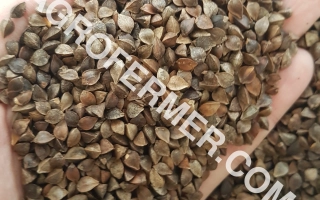
Light Brown
Grain; Protein Content
11-12%
About product

A versatile, high-yielding sorghum variety for grain and silage with a short maturity cycle.
Direction
Grain, Silage
Vegetation Period
90-100 days
Grain; Color
Light Brown
Grain; Protein Content
11-12%
Description
Resilient Performance in Challenging Conditions
The «Hudok» sorghum variety is an essential tool for growers seeking predictable yields with minimal reliance on heavy fungicide applications. Developed by the Institute of Grain Crops of the UAAS, this variety exhibits robust natural resistance to major pathogens, specifically fusarium, helminthosporium, and mold. «Hudok» serves as a reliable asset in the field, offering superior seed resistance to mold, which ensures consistent germination even when soil temperatures fluctuate during planting.
Versatility for Modern Crop Rotation
The primary advantage of «Hudok» is its dual-purpose utility. Farms utilize this variety for high-quality grain production and as a primary crop for high-energy silage. A maturity cycle of 90–100 days allows for efficient harvest planning and integration into intensive crop rotation schemes. Reaching a height of 180–200 cm, it produces a significant biomass yield, making it an ideal choice for livestock operations.
Technical Specifications and Quality
- Nutritional Value: With a protein content of 11–12% and starch levels between 70–80%, this variety provides an excellent base for high-quality poultry and cattle feed mixtures.
- Durability: The light-brown grain displays excellent storage characteristics and high physical quality.
- Agronomic Efficiency: The variety responds well to fertilization but maintains high productivity under average soil fertility, directly contributing to lower production costs.
«Hudok» is highly recommended for regions where drought tolerance and early harvest capabilities are crucial for optimizing farm logistics and profitability.
Crop & resistance
Crop
Disease resistance
Specifications hover over for a hint about the specification
|
Direction
Direction
Existing varieties and types of cabbage are grown for fresh consumption, long-term storage, and technical processing. |
|
|---|---|
| Vegetation Period | 90-100 days |
| Grain; Color | |
| Grain; Protein Content | 11-12% |
| Grain; Starch Content | 70-80% |
| Plant; height | 180-200cm |
| Registration year | 2009 |
| Catalog | Catalog → Sorghum |
| Legal data |
Show · 1
|
| Country | Ukraine |
Store offers
Prices are updated on loadLoading offers…
Aggregator catalog: prices are collected automatically from store websites, normalized by AI and converted at the current exchange rate. Before ordering, confirm the price and availability on the store's website. This block is not indexed by search engines — the data is loaded after the page opens.
Not yet комментариев. Be the first!
Alternatives
Sorghum seeds · similar varieties






See also
Often considered together with this variety





Recently viewed
Products you’ve viewed on this site
Reviews · 0