

SKU #67920
·
43 views
HANKAISK 429
Rice
User rating
0 votes0% positive reviews
No ratings yet — be the first.
Kernel Type
Long-grain
Ripening Period
120-130
Yield
6-7
Corn Color
White
About product

Hankaisk 429 is a variety of rice (Oryza sativa L.) belonging to the long-grain and mid-ripening types, cultivated in various regions of Russia, including Krasnodar and Primorsky Krai. It is characterized by high grain vitreousness, which ensures excellent technological and culinary qualities. The grain is semi-round, narrow, white in color, with a 1000-grain weight ranging from 26-31 grams, indic…
Kernel Type
Long-grain
Ripening Period
120-130
Yield
6-7
Corn Color
White
Description
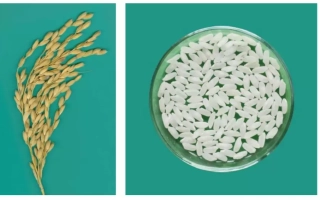
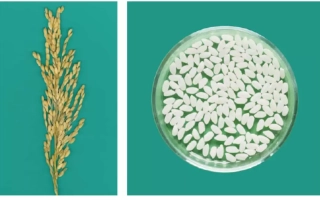
Hankaisk 429 is a variety of rice (Oryza sativa L.) belonging to the long-grain and mid-ripening types, cultivated in various regions of Russia, including Krasnodar and Primorsky Krai. It is characterized by high grain vitreousness, which ensures excellent technological and culinary qualities. The grain is semi-round, narrow, white in color, with a 1000-grain weight ranging from 26-31 grams, indicating its high density and quality. The variety is distinguished by its resistance to lodging and shattering, as well as high yield, which in some regions exceeds average figures by 2-5 centners per hectare.
Hankaisk 429 rice possesses good cold hardiness, high germination energy, and field germination, making it a reliable choice for cultivation in various climatic conditions. The plant stem is strong, of medium length, with short and convex nodes, while the foliage is characterized by the absence of anthocyanin pigmentation and moderate pubescence. The panicle is of medium length, yellow, dense, and awnless, which facilitates harvesting and reduces crop losses. The variety is also resistant to pyricularia and has moderate susceptibility to rice leaf nematode, which enhances its disease resistance.
Hankaisk 429 is widely used for the production of high-quality rice flour, which maintains its shape during cooking and has a high yield. Due to compliance with the requirements of GOST 6293-90, this variety is suitable for the production of baby food products and other first-class food products. Its high technological and culinary properties make it a valuable variety for agrarians and the food industry.
Hankaisk 429 rice possesses good cold hardiness, high germination energy, and field germination, making it a reliable choice for cultivation in various climatic conditions. The plant stem is strong, of medium length, with short and convex nodes, while the foliage is characterized by the absence of anthocyanin pigmentation and moderate pubescence. The panicle is of medium length, yellow, dense, and awnless, which facilitates harvesting and reduces crop losses. The variety is also resistant to pyricularia and has moderate susceptibility to rice leaf nematode, which enhances its disease resistance.
Hankaisk 429 is widely used for the production of high-quality rice flour, which maintains its shape during cooking and has a high yield. Due to compliance with the requirements of GOST 6293-90, this variety is suitable for the production of baby food products and other first-class food products. Its high technological and culinary properties make it a valuable variety for agrarians and the food industry.
Crop & resistance
Disease resistance
Specifications hover over for a hint about the specification
|
Kernel Type
Kernel Type
Dent corn (Zea mays indentata) — Large, elongated, flat kernels. The endosperm is horny on the sides of the kernel, mealy in the center and at the top. A depression forms at the top of the kernel upon ripening. Dent corn is the most widely cultivated group among others. Plants ty... |
|
|---|---|
|
Ripening Period
Ripening Period
It takes 70-100 days until pepper reaches flowering stage, 130-160 days until technical fruit ripeness, and 135-180 days until physiological ripeness. |
120-130 |
|
Yield
Yield
Overall bulb harvest per unit area. Depends on both onion variety characteristics and agronomic practices, fertilizers, and irrigation. Under optimal growing conditions, an onion yield of 100 tons per hectare and above is not considered record-breaking. |
6-7 |
| Corn Color | |
| Assignment | |
| Variety Characteristics | |
| Registration year | 1996 |
| Catalog | Catalog → Rice |
| Legal data |
Show · 1 |
| Country | Russia |
Store offers
Prices are updated on loadLoading offers…
Aggregator catalog: prices are collected automatically from store websites, normalized by AI and converted at the current exchange rate. Before ordering, confirm the price and availability on the store's website. This block is not indexed by search engines — the data is loaded after the page opens.
Not yet комментариев. Be the first!



See also
Often considered together with this variety


Recently viewed
Products you’ve viewed on this site
Reviews · 0