


SKU #47973
·
59 views
Strawberry Capri
Wild Strawberry, Strawberry
C.I.V CONSORZIO ITALIANO VIVAISTIFruiting
Remontant variety
Berry Weight
20-30 grams, 20-30
Growing Method
Open Ground, Protected ground
Ripening Period
Remontant (from 2 waves / 60+)
Your mark
0 votes
0% positive ratings
Store offers · 3 from 3 stores
3 offers in 3 stores — from 0.27 € per seedling.
Available at: AgroMisto · LeafLand · Plodsad
Prices are collected automatically from store websites and converted at the current exchange rate. Check the price and availability on the store website before ordering.
Description
Strawberry variety Capri — an Italian remontant variety developed in 2005 by breeders of the Italian Nursery Consortium. This variety is characterized by high yield and prolonged fruiting, which lasts from June to November, providing three to four harvest waves per season. The bushes are medium-sized, compact, about 30 cm tall, with dark green, medium-density foliage and upright stems. Leaf blades have serrated edges and slightly concave surfaces. Flower stems are upright, up to 25 cm long, bearing white bisexual flowers with abundant pollen. The variety produces only a small number of runners.
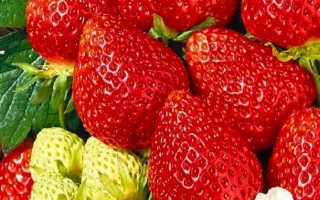
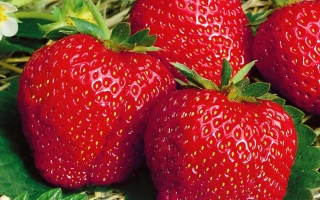
Capri berries are large, conical or broad-conical in shape, 45–50 mm long and 40–45 mm in diameter, with an average weight of 20–35 g. The skin is dense, glossy, deep burgundy in color, and orange-red at technical ripeness. The flesh is juicy, firm, and very tasty, without acidity, with few internal cavities. Even under-ripe berries are sweet, and sugar content does not decrease during rainy summers or at the end of the season. Thanks to its dense skin and flesh, the strawberry is well-suited for storage and transportation, making this variety particularly attractive for commercial cultivation.
Capri requires minimal care and adapts well to various growing conditions: it thrives in open ground, containers, greenhouses, and tunnels, as well as on substrates. The variety is resistant to powdery mildew, fungal diseases, leaf spots, and rot, and possesses high cold tolerance. For optimal fruiting, plant on sunny, fertile, and well-drained soil with regular watering, especially during drought periods. With proper agronomy, yield reaches 1.5–2 kg per bush, and up to 15 kg per square meter in the first two years after planting. However, yield declines from the third year, so plantings require renewal.
Capri berries are large, conical or broad-conical in shape, 45–50 mm long and 40–45 mm in diameter, with an average weight of 20–35 g. The skin is dense, glossy, deep burgundy in color, and orange-red at technical ripeness. The flesh is juicy, firm, and very tasty, without acidity, with few internal cavities. Even under-ripe berries are sweet, and sugar content does not decrease during rainy summers or at the end of the season. Thanks to its dense skin and flesh, the strawberry is well-suited for storage and transportation, making this variety particularly attractive for commercial cultivation.
Capri requires minimal care and adapts well to various growing conditions: it thrives in open ground, containers, greenhouses, and tunnels, as well as on substrates. The variety is resistant to powdery mildew, fungal diseases, leaf spots, and rot, and possesses high cold tolerance. For optimal fruiting, plant on sunny, fertile, and well-drained soil with regular watering, especially during drought periods. With proper agronomy, yield reaches 1.5–2 kg per bush, and up to 15 kg per square meter in the first two years after planting. However, yield declines from the third year, so plantings require renewal.
Crop & resistance
Disease resistance
Specifications
No reviews yet. Be the first to share your experience.
Alternatives
Strawberry seedlings · similar varieties







See also
Often considered together with this variety




Recently viewed
Products you’ve viewed on this site
Reviews