


SKU #67317
·
30 views
Yunona
Pumpkin
ООО'АГРО-БЕСТ'User rating
0 votes0% positive reviews
No ratings yet — be the first.
Plant Type
Unlimited Whip
Fruit; shape
Round
Fruit; weight
3-5 kg
Fruit; peel color
Yellow-brown stripes, Dark green stripes
About product

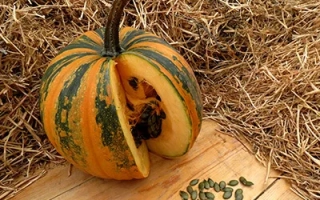
The Junona pumpkin variety is an early-maturing, high-yield, and disease-resistant variety suitable for cultivation in various climatic conditions. The plant is sprawling and vining, which requires adherence to spatial isolation during cultivation to avoid cross-pollination with zucchini, courgettes, and other pumpkin varieties. This is important for preserving the unique feature of the variety—th…
Plant Type
Unlimited Whip
Fruit; shape
Round
Fruit; weight
3-5 kg
Fruit; peel color
Yellow-brown stripes, Dark green stripes
Description
The Junona pumpkin variety is an early-maturing, high-yield, and disease-resistant variety suitable for cultivation in various climatic conditions. The plant is sprawling and vining, which requires adherence to spatial isolation during cultivation to avoid cross-pollination with zucchini, courgettes, and other pumpkin varieties. This is important for preserving the unique feature of the variety—the absence of a seed coating.
The fruits have a round shape, yellow-orange color with green stripes and a weak sheen. The fruit mass usually ranges from 3 to 4 kg, although specimens up to 6 kg are found. The flesh thickness is about 2.5 cm and has a pleasant taste. The seeds are elliptical in shape, olive-green in color, and lack a coating, making them particularly valuable for processing.
The Junona pumpkin is versatile in use: its fruits are suitable for consumption fresh, as well as for stewing, baking, and processing. Oil can be produced from the seeds, and they can also be used as an additive in bread and dough. Collected fruits store well at 10-15 °C for 4-5 months, ensuring a long shelf life and storage convenience.
The fruits have a round shape, yellow-orange color with green stripes and a weak sheen. The fruit mass usually ranges from 3 to 4 kg, although specimens up to 6 kg are found. The flesh thickness is about 2.5 cm and has a pleasant taste. The seeds are elliptical in shape, olive-green in color, and lack a coating, making them particularly valuable for processing.
The Junona pumpkin is versatile in use: its fruits are suitable for consumption fresh, as well as for stewing, baking, and processing. Oil can be produced from the seeds, and they can also be used as an additive in bread and dough. Collected fruits store well at 10-15 °C for 4-5 months, ensuring a long shelf life and storage convenience.
Video · 1 video
Suggest a video →Crop & resistance
Crop
Specifications hover over for a hint about the specification
| Plant Type | |
|---|---|
|
Fruit; shape
Fruit; shape
Spherical, oval, flattened or cylindrical shape. |
|
|
Fruit; weight
Fruit; weight
Table watermelons weigh 0.6-16 kg. |
3-5 kg |
| Fruit; peel color | |
| Laziness | |
| Registration year | 2006 |
| Catalog | Catalog → Pumpkin |
| Manufacturer | ООО'АГРО-БЕСТ' |
| Legal data |
Show · 5
|
| Country | Russia |
Store offers
Prices are updated on loadLoading offers…
Available at: Agro-market
Aggregator catalog: prices are collected automatically from store websites, normalized by AI and converted at the current exchange rate. Before ordering, confirm the price and availability on the store's website. This block is not indexed by search engines — the data is loaded after the page opens.
Not yet комментариев. Be the first!
Alternatives
Pumpkin seeds · similar varieties




See also
Often considered together with this variety






Recently viewed
Products you’ve viewed on this site
Reviews · 0