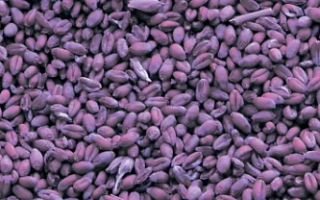
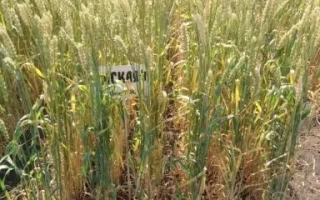
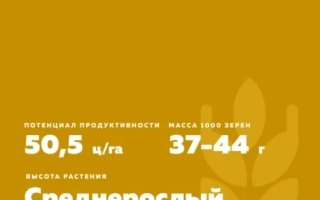
Suslyakov Memorial is a variety of soft spring wheat (Triticum aestivum L.) of medium-late maturity with a vegetation period of 82-89 days. It belongs to the lutescens group and is characterized by a plant of medium height, resistant to lodging. The mass of 1000 grains is 39-47 grams, which ensures good filler and satisfactory, often good, baking qualities. The variety is recommended for cultivation in Western Siberia regions, including Kemerovo, Novosibirsk, and Omsk oblasts, where the average yield reaches 37.4 centners per hectare.
The Suslyakov Memorial variety is distinguished by high resistance to lodging, diseases, and adverse climatic conditions, making it a reliable choice for agricultural production. Despite this, under field conditions, the variety can be affected by powdery head smut and septoria, which requires attention in agronomic activities. Scientists from the Omsk Agro-Scientific Center involved in the development of the variety aim to create varieties capable of competing with foreign analogues, providing quality seeds for various climatic zones.
The creation of the Suslyakov Memorial variety is part of a large-scale scientific project "Bread of Russia", implemented under the auspices of the Vavilov All-Russian Institute of Plant Genetic Resources together with the Omsk Agro-Scientific Center and other leading scientific institutions of the country. This variety represents a promising direction in wheat breeding aimed at increasing yield and adaptability of crops under Russian climate conditions.