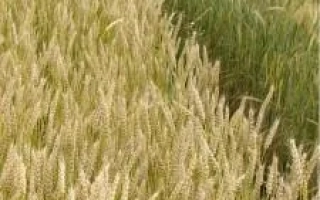
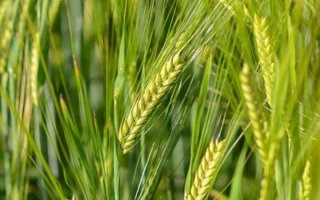
Kazanskaya 560 is a variety of winter soft wheat, created at the Tatar Research Institute of Agriculture through selection of the glutenin spectrum from the Meshinskaya variety. The variety belongs to medium-early maturing types, ripening 1-2 days later than the Mironovskaya 808, and possesses a high biological productivity potential, with a potential yield of up to 6.0 tons/ha. It is recommended for cultivation in the Republic of Tatarstan and other regions of the Middle Volga, where it demonstrates high adaptability to local climatic conditions.
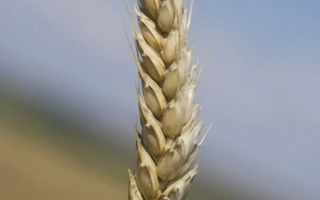
The plants are medium-height, ranging from 84 to 108 cm, with a semi-erect bush and good tillering. The ear is fusiform, of medium density, white in color, with awns along the entire length and long awns at the tip. The mass of 1000 grains is 35-46 g, the grain is ovoid and colored. The variety is characterized by the absence or weak pubescence of the upper node, medium waxy bloom on the sheath of the flag leaf and ear, as well as strong waxy bloom on the flag leaf blade.
Kazanskaya 560 is distinguished by its high frost-winter hardiness and drought resistance, making it a reliable choice for complex climatic conditions. The variety is weakly susceptible to powdery mildew and brown leaf rust, however it is susceptible to brown rust and highly susceptible to snow mold. The content of raw gluten in the grain is 32.4%, raw protein — 14.2%, which ensures good bread-making qualities at the level of the strong wheat Mironovskaya 808. The optimal sowing time is late August, the sowing rate is 5.5 million viable seeds per hectare.