


SKU #3657
·
471 views
Krasnoyarskaya Krupnaya
Pear
User rating
0 votes0% positive reviews
No ratings yet — be the first.
Type of Sort
Summer variety of pear
About product

Summer variety developed at the Krasnoyarsk Experimental Station for Fruit Growing by N. N. Tikhonov and A. S. Tolmacheva from crossing the variety Tёma with Bere Zimney of Michurin. Mainly cultivated by collective gardeners. Approved for the West Siberian region.
Medium-sized tree, with a sparse, drooping pyramidal crown of moderate leafiness, fruiting on simple and complex buds, spurs, and e…
Type of Sort
Summer variety of pear
Description
Summer variety developed at the Krasnoyarsk Experimental Station for Fruit Growing by N. N. Tikhonov and A. S. Tolmacheva from crossing the variety Tёma with Bere Zimney of Michurin. Mainly cultivated by collective gardeners. Approved for the West Siberian region.
Medium-sized tree, with a sparse, drooping pyramidal crown of moderate leafiness, fruiting on simple and complex buds, spurs, and even on last year's growth. Bark is gray-brown with a silvery sheen, smooth. Begins fruiting on 2-3-year-old wood.
Medium-thick shoots, straight, round in cross-section, reddish, slightly hairy. Buds are recurved, large, elongated.
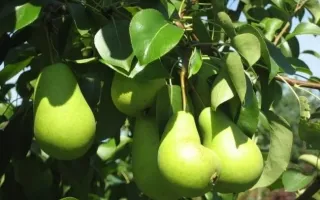
Fruits for Siberia are large, short pear-shaped, sometimes warty. Color is greenish, with lighter spots and characteristic, clearly visible emerald-green subcutaneous dots. Peduncle is long, thick, slightly curved. Calyx is usually half-open, in a narrow middle dish. Subcalyx tube is short, cup-shaped.
Flesh is white, medium density, tender, sometimes with granules. Taste is sour-sweet, with noticeable bitterness in cold years. Chemical composition of the fruit: dry matter — 14.0%, sugars — 7.8%, titratable acids — 1.08%, ascorbic acid — 4.6 mg/100g, vitamin P — 189.0 mg/100g.
Storage life 10-15 days in soil storage. Transportability is average.
Fruits are of universal use.
Begins fruiting at 6-8 years. Maximum yield — 146 centners/ha at 19 years of age.
Medium winter hardiness. No tree deaths observed over 30 years. During winter with a total of negative temperatures -2426.5°, at minimum temperature -41.3°, freezing is less than average, flower bud death 45%, flowers 77%. Resistant to scab.
Advantages of the variety: high yields, fruit size, universal use, resistance to scab.
Disadvantages of the variety: insufficient transportability and weak fruit storage life.
Crop & resistance
Crop
Disease resistance
Specifications
| Type of Sort | |
|---|---|
| Catalog | Catalog → Pear |
Store offers
Prices are updated on loadLoading offers…
Available at: Гарденмарт
Aggregator catalog: prices are collected automatically from store websites, normalized by AI and converted at the current exchange rate. Before ordering, confirm the price and availability on the store's website. This block is not indexed by search engines — the data is loaded after the page opens.
Not yet комментариев. Be the first!
Alternatives
Pear saplings · similar varieties



See also
Often considered together with this variety






Recently viewed
Products you’ve viewed on this site
Reviews · 0