


SKU #66080
·
41 views
Melon Mazurka
Melon
НПК «Сембиотек»User rating
0 votes0% positive reviews
No ratings yet — be the first.
Beginning of fruiting
75-80 days
Fruit; flower
Yellow
Fruit; weight
1.5-2.0 kg, 2.0-3.0 kg, 3.0-6.0 kg
Registration year
2014
Prices in stores
from120 €per 1000 seeds
pack from 0.36 € per 3 pcs
1 offer from 1 store
Store offers · 1 from 1 stores
Prices are updated on loadLoading offers…
Available at: Veragarden
Aggregator catalog: prices are collected automatically from store websites, normalized by AI and converted at the current exchange rate. Before ordering, confirm the price and availability on the store's website. This block is not indexed by search engines — the data is loaded after the page opens.
About product

Mazurka melon is a mid-season hybrid with a maturity period of 75 to 103 days, allowing it to be grown both in open and protected ground. The plant is vining with a powerful medium-sized leaf apparatus, which promotes good development and high yield. The hybrid is characterized by high adaptability to various climatic conditions, stress resistance, heat tolerance, and drought resistance, making it…
Beginning of fruiting
75-80 days
Fruit; flower
Yellow
Fruit; weight
1.5-2.0 kg, 2.0-3.0 kg, 3.0-6.0 kg
Registration year
2014
Description
Mazurka melon is a mid-season hybrid with a maturity period of 75 to 103 days, allowing it to be grown both in open and protected ground. The plant is vining with a powerful medium-sized leaf apparatus, which promotes good development and high yield. The hybrid is characterized by high adaptability to various climatic conditions, stress resistance, heat tolerance, and drought resistance, making it versatile for cultivation in different regions.
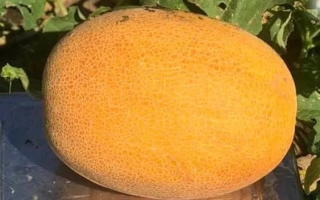
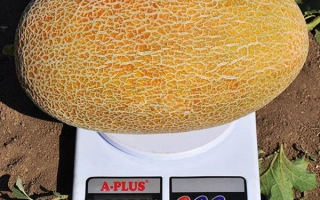
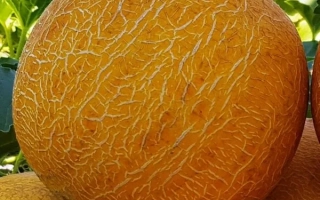
Mazurka melon fruits are wide-elliptical, yellow in color with smooth skin covered by a medium-thickness and density netting. Fruit mass varies from 1.6 to 10 kg depending on growing conditions; they have dense, juicy, and aromatic flesh of a light shade with high sugar content (around 8.2%), ensuring excellent taste qualities. Fruits are resistant to cracking, sunburn, fusarium wilt, and powdery mildew, are well-transported, and maintain their consumer properties for up to 30 days after harvest.
For successful cultivation of Mazurka, it is recommended to use light, permeable, and fertile soils, ensure adequate watering, and provide regular fertilization. Seeds are sown for seedlings at the end of April with preliminary treatment, and transplanting to open ground is carried out when the soil temperature reaches 15-16°C. Plants are formed into one stem with 2-3 fruits, using planting schemes of 70×40 cm in greenhouses with trellis support and 140×50 cm in open ground. This approach ensures high yield and fruit quality.
Mazurka melon fruits are wide-elliptical, yellow in color with smooth skin covered by a medium-thickness and density netting. Fruit mass varies from 1.6 to 10 kg depending on growing conditions; they have dense, juicy, and aromatic flesh of a light shade with high sugar content (around 8.2%), ensuring excellent taste qualities. Fruits are resistant to cracking, sunburn, fusarium wilt, and powdery mildew, are well-transported, and maintain their consumer properties for up to 30 days after harvest.
For successful cultivation of Mazurka, it is recommended to use light, permeable, and fertile soils, ensure adequate watering, and provide regular fertilization. Seeds are sown for seedlings at the end of April with preliminary treatment, and transplanting to open ground is carried out when the soil temperature reaches 15-16°C. Plants are formed into one stem with 2-3 fruits, using planting schemes of 70×40 cm in greenhouses with trellis support and 140×50 cm in open ground. This approach ensures high yield and fruit quality.
Crop & resistance
Crop
Disease resistance
Specifications hover over for a hint about the specification
|
Beginning of fruiting
Beginning of fruiting
The early maturity of watermelon varieties mainly depends on the duration of growth and fruit ripening phases, rather than the timing of female flower blooming. Many varieties, ripening at different times, begin to bloom almost simultaneously. Approximately 30 days after fruit se... |
75-80 days |
|---|---|
|
Fruit; flower
Fruit; flower
At technical maturity, fruit color varies from white, light purple to dark purple. |
|
|
Fruit; weight
Fruit; weight
Table watermelons weigh 0.6-16 kg. |
1.5-2.0 kg, 2.0-3.0 kg, 3.0-6.0 kg |
| Registration year | 2014 |
| Catalog | Catalog → Melon |
| Manufacturer | НПК «Сембиотек» |
| Legal data |
Show · 4
|
| Country | Russia |
Not yet комментариев. Be the first!
Alternatives
Melon seeds · similar varieties





See also
Often considered together with this variety





Recently viewed
Products you’ve viewed on this site
Reviews · 0