


SKU #71896
·
63 views
OLOVSKY SIDERATE
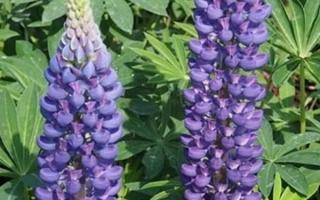
Lupin
User rating
0 votes0% positive reviews
No ratings yet — be the first.
Usage
Cover Crop
Protein content in dry matter (%)
23
Registration year
2006
About product

A powerful biological tool for nitrogen enrichment and soil pathogen management.
Usage
Cover Crop
Protein content in dry matter (%)
23
Registration year
2006
Description
Soil Health and Natural Nitrogen Fixation
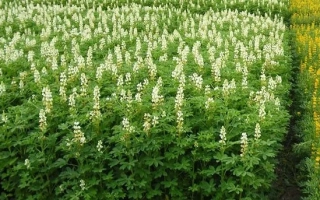
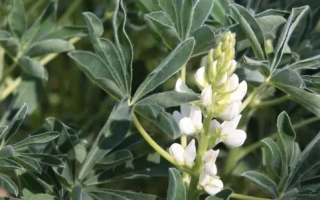
The «Orlovsky Siderat» lupin, developed by the Federal Research Center for Legumes and Grops, is a specialized cultivar designed for intensive soil recovery. Unlike forage varieties, this hybrid is engineered specifically as a green manure tool to optimize soil structure and nutrient levels for subsequent cropping seasons.
Agronomic Applications and Benefits
Integrating «Orlovsky Siderat» into your crop rotation cycle offers significant operational advantages for large-scale and small-hold farms aiming for sustainable fertility:
- High Protein Biomass: With a dry matter protein content of 23%, this lupin acts as a high-quality green fertilizer. Incorporating the biomass at the start of the flowering phase ensures rapid decomposition and nutrient availability for the next crop.
- Innate Disease Resistance: Bred for resistance to anthracnose, grey mold (Botrytis), and fusarium, the plant helps sanitize the soil by reducing the pathogen load in the field.
- Pest Suppression: The root system architecture makes the soil environment less hospitable to wireworms, providing a natural deterrent without the need for additional soil-applied insecticides.
- Deep Soil Conditioning: The taproot system reaches deep soil horizons, improving aeration and water infiltration in compacted fields.
Practical implementation focuses on using this cultivar as a catch crop or a fallow-year solution. By choosing this variety, farmers can effectively reduce their reliance on mineral nitrogen fertilizers while actively improving the overall phytosanitary state of their soil. It is a precise tactical choice for growers dealing with soil exhaustion or recurring root disease issues in grain-legume crop sequences.
Crop & resistance
Crop
Disease resistance
Pest resistance
Specifications
| Usage | |
|---|---|
| Protein content in dry matter (%) | 23 |
| Registration year | 2006 |
| Catalog | Catalog → Lupin |
| Legal data |
Show · 1 |
| Country | Russia |
Store offers
Prices are updated on loadLoading offers…
Aggregator catalog: prices are collected automatically from store websites, normalized by AI and converted at the current exchange rate. Before ordering, confirm the price and availability on the store's website. This block is not indexed by search engines — the data is loaded after the page opens.
Not yet комментариев. Be the first!



See also
Often considered together with this variety







Recently viewed
Products you’ve viewed on this site
Reviews · 0