


SKU #62243
·
47 views
KUBATTIK
Grape
Фгбоу Во Кубанский Государственный Аграрный Университет Имени И.Т.ТрубилинаUser rating
0 votes0% positive reviews
No ratings yet — be the first.
Usage Group
Dining
Ripening Period
Early
Cold Resistance
Very High (up to -27°C)
Resistance to Gray Mold
Average
About product

Kubattik grape is an early-ripening table variety of seedless grapes, distinguished by large conical clusters with an average weight of about 700 grams. The berries have an egg-shaped form and a dark red-purple color, with fleshy pulp and colorless juice. The fruit taste is neutral, pleasant, with a high sensory score reaching 9.73 points. The seeds are rudimentary, which makes the variety especia…
Usage Group
Dining
Ripening Period
Early
Cold Resistance
Very High (up to -27°C)
Resistance to Gray Mold
Average
Description
Kubattik grape is an early-ripening table variety of seedless grapes, distinguished by large conical clusters with an average weight of about 700 grams. The berries have an egg-shaped form and a dark red-purple color, with fleshy pulp and colorless juice. The fruit taste is neutral, pleasant, with a high sensory score reaching 9.73 points. The seeds are rudimentary, which makes the variety especially convenient for fresh consumption. The berry skin is quite dense and slightly thick but without astringent aftertaste, providing a pleasant sensation when eating.
The Kubattik variety bushes are vigorous and require a light-loving location for planting, preferably in well-lit areas. The plant is not demanding regarding soil type, develops well on various soils except for excessively wet, swampy, and saline ones. Frost resistance of the variety ranges from -25 to -27 degrees Celsius, allowing its cultivation in regions with moderately cold climates. The grape has a medium degree of resistance to diseases, including gray rot and other fungal infections.
The variety is characterized by high yield, reaching 25-30 tons per hectare, and requires yield normalization to maintain fruit quality. The clusters are dense, up to 30 cm long, and the berries weigh about 4-5 grams. The grapes store well with minimal weight loss and are not susceptible to rot development under proper conditions. The variety has high transportability, making it attractive for commercial cultivation and sales. For planting, it is recommended to use saplings with a packaged root system, which should be stored at temperatures from 0 to +2 degrees Celsius until planting.
The Kubattik variety bushes are vigorous and require a light-loving location for planting, preferably in well-lit areas. The plant is not demanding regarding soil type, develops well on various soils except for excessively wet, swampy, and saline ones. Frost resistance of the variety ranges from -25 to -27 degrees Celsius, allowing its cultivation in regions with moderately cold climates. The grape has a medium degree of resistance to diseases, including gray rot and other fungal infections.
The variety is characterized by high yield, reaching 25-30 tons per hectare, and requires yield normalization to maintain fruit quality. The clusters are dense, up to 30 cm long, and the berries weigh about 4-5 grams. The grapes store well with minimal weight loss and are not susceptible to rot development under proper conditions. The variety has high transportability, making it attractive for commercial cultivation and sales. For planting, it is recommended to use saplings with a packaged root system, which should be stored at temperatures from 0 to +2 degrees Celsius until planting.
Crop & resistance
Crop
Specifications hover over for a hint about the specification
| Usage Group | |
|---|---|
|
Ripening Period
Ripening Period
It takes 70-100 days until pepper reaches flowering stage, 130-160 days until technical fruit ripeness, and 135-180 days until physiological ripeness. |
Early |
| Cold Resistance | |
| Resistance to Gray Mold | |
|
Yield
Yield
Overall bulb harvest per unit area. Depends on both onion variety characteristics and agronomic practices, fertilizers, and irrigation. Under optimal growing conditions, an onion yield of 100 tons per hectare and above is not considered record-breaking. |
High |
| Bush Growth Power | |
| Bunch Size | Large (500–800 g) |
| Berry Size | Medium (2–5 g) |
| Berry Color | |
| Flavor | |
| Care Requirement | |
| Assignment | |
| Features | |
| Registration year | 2015 |
| Catalog | Catalog → Grape |
| Manufacturer | Фгбоу Во Кубанский Государственный Аграрный Университет Имени И.Т.Трубилина |
| Legal data |
Show · 9
|
| Country | Russia |
Store offers
Prices are updated on loadLoading offers…
Aggregator catalog: prices are collected automatically from store websites, normalized by AI and converted at the current exchange rate. Before ordering, confirm the price and availability on the store's website. This block is not indexed by search engines — the data is loaded after the page opens.
Not yet комментариев. Be the first!
Alternatives
Grapevine saplings · similar varieties
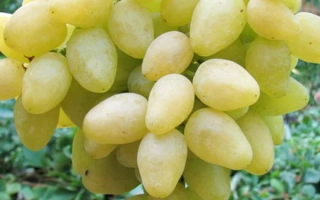
EXPECTED
Фгбоу Во Кубанский Государственный Аграрный Университет Имени И.Т.Трубилина
049 10 offers
2.58 €per seedling ≈ 133 ₴




See also
Often considered together with this variety


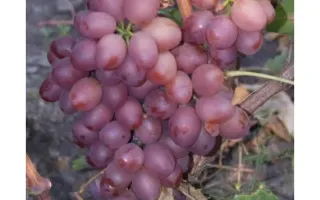
LIBYA K
Фгбоу Во Кубанский Государственный Аграрный Университет Имени И.Т.Трубилина
045 6 offers
2.72 €per seedling ≈ 140 ₴

ROSHFOR K
Фгбоу Во Кубанский Государственный Аграрный Университет Имени И.Т.Трубилина
048 7 offers
3.78 €per seedling ≈ 195 ₴



Recently viewed
Products you’ve viewed on this site
Reviews · 0