


SKU #70846
·
49 views
Pagoda
Fescue
RosNIIPITI SK / Saratovskiy GUBIUser rating
0 votes0% positive reviews
No ratings yet — be the first.
Assignment
Lawn, Decorative, Feed
Germination Speed (days)
7-14
Plant Height
20-40
Tread Wear Resistance
High
About product

A multifunctional fescue with high durability for ornamental landscaping and forage purposes.
Assignment
Lawn, Decorative, Feed
Germination Speed (days)
7-14
Plant Height
20-40
Tread Wear Resistance
High
Description
A Universal Solution for Landscaping and Agriculture
The 'Pagoda' fescue variety is a result of breeding efforts by RosNIIPTI SK and the Saratov GUGBI, focused on developing a resilient material capable of performing effectively across diverse climatic conditions. The development of this variety was led by a group of experts, including Valery Ivanovich Zhuzhukin and Galina Ivanovna Kostina, emphasizing a rigorous scientific approach to the breeding of forage and ornamental grasses.
Agrotechnical Features and Application
The primary value of 'Pagoda' lies in its versatility. Although genetically intended as a highly resilient crop, the variety has found broad application in three key areas:
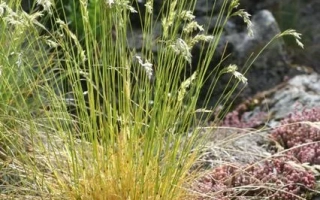
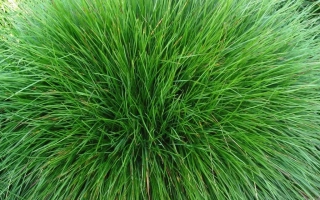
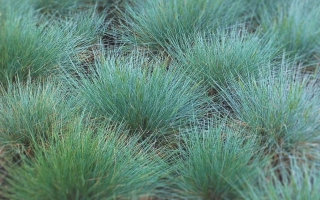
- Ornamental Landscaping: The variety exhibits a vibrant green foliage and forms a dense sward, making it highly sought after in landscape design.
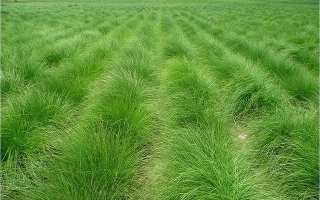
- Lawn Use: Due to its high resistance to trampling, 'Pagoda' performs exceptionally well under pressure in park zones and private residential areas.
- Forage Base: The historical breeding achievements of the institute have provided the variety with solid green mass productivity, allowing it to be utilized as a pasture crop as well.
Specifications and Sowing Recommendations
To achieve optimal coverage, a seeding rate of 30-40 g/m² is recommended. Seedlings emerge within 7-14 days, demonstrating strong germination energy for this crop. The compact nature of the variety (plant height ranging from 20 to 40 cm) helps minimize mowing frequency when used for lawns, while maintaining a neat appearance of the site.
The project, carried out with the participation of the Eco Reference Farm and specialized research institutes, confirms the reputation of 'Pagoda' as a reliable material for regions with variable conditions. Its balanced characteristics allow the variety to maintain viability under intensive use, which is backed by the experience of professional landscapers and agronomists.
Specifications
| Assignment | |
|---|---|
| Germination Speed (days) | 7-14 |
| Plant Height | 20-40 |
| Tread Wear Resistance | |
| Recommended sowing rate (g/m²) | 30-40 |
| Leaf Decorativeness | |
| Registration year | 2009 |
| Catalog | Catalog → Fescue |
| Manufacturer | RosNIIPITI SK / Saratovskiy GUBI |
| Legal data |
Show · 10
|
| Country | Russia |
Store offers
Prices are updated on loadLoading offers…
Aggregator catalog: prices are collected automatically from store websites, normalized by AI and converted at the current exchange rate. Before ordering, confirm the price and availability on the store's website. This block is not indexed by search engines — the data is loaded after the page opens.
Not yet комментариев. Be the first!
Alternatives
Fescue seeds · similar varieties




See also
Often considered together with this variety









Recently viewed
Products you’ve viewed on this site
Reviews · 0