
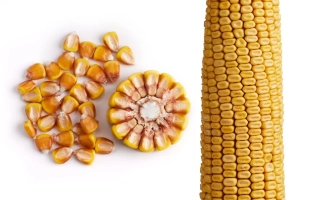


SKU #56412
·
42 views
SEVERINA
Corn
Селекционно-семеноводческий Центр ОтборUser rating
0 votes0% positive reviews
No ratings yet — be the first.
Ripening
Early
Hybrid Type
Three-line hybrid
Kernel Type
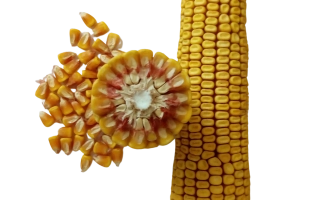
Dent, Yellow-Orange
Use Direction
Grain, Silage
About product

A versatile early-maturing three-way hybrid for consistent grain production and high-quality silage.
Ripening
Early
Hybrid Type
Three-line hybrid
Kernel Type
Dent, Yellow-Orange
Use Direction
Grain, Silage
Description
Technical Potential of the «Severina» Hybrid
The «Severina» three-way maize hybrid, presented by the Selection and Seed Center «Otbor», is engineered for intensive farming practices. Its architectural design is optimized for consistent yields in both grain and silage production, serving as a versatile tool for balanced crop rotation.
Morphological Characteristics and Grain Productivity
The yellow-orange dent-type grain exhibits high density and ideal vitreousness. Early maturity allows for the most efficient use of the active temperature period, mitigating risks during late autumn harvests. The three-way cross breeding strategy provides a pronounced heterosis effect, resulting in highly uniform stands and superior adaptability to fluctuating environmental conditions.
Agrotechnical Advantages
- Phytosanitary Resilience: The hybrid's genetic profile includes high tolerance to maize smut (Ustilago maydis), which is essential for preserving cob integrity and overall grain quality.
- Technological Flexibility: The recommended planting density of 80,000–85,000 plants per hectare ensures that the crop reaches its full cob-forming potential without excessive inter-row competition.
- Usage Versatility: The high energy value of the green biomass makes this hybrid an excellent candidate for livestock farms focused on quality silage, while still providing robust dry grain yields.
«Severina» is designed for agricultural operations where rapid maturity and high yield are non-negotiable. The selection process, taking modern pathogens into account, provides agronomists with the necessary durability and reliability required for farming in variable climate zones.
Crop & resistance
Crop
Disease resistance
Specifications hover over for a hint about the specification
| Ripening | Early |
|---|---|
| Hybrid Type | |
|
Kernel Type
Kernel Type
Dent corn (Zea mays indentata) — Large, elongated, flat kernels. The endosperm is horny on the sides of the kernel, mealy in the center and at the top. A depression forms at the top of the kernel upon ripening. Dent corn is the most widely cultivated group among others. Plants ty... |
|
|
Use Direction
Use Direction
Dual-purpose hybrids: for silage and grain in all growing regions. These are "stay-green" type hybrids, meaning the plants remain green for a longer period. However, this does not affect the sugar, cellulose, and hemicellulose content, nor the degree of lignification of the plant... |
|
|
Recommended Density
Recommended Density
Optimal productivity is achieved at a planting density of 4000-5500 plants/ha. Possible planting scheme: 300-500x40-80 cm. |
80-85 thousand pcs/ha |
| Registration year | 2020 |
| Catalog | Catalog → Corn |
| Manufacturer | Селекционно-семеноводческий Центр Отбор |
| Legal data |
Show · 14
|
| Country | Russia |
Store offers
Prices are updated on loadLoading offers…
Aggregator catalog: prices are collected automatically from store websites, normalized by AI and converted at the current exchange rate. Before ordering, confirm the price and availability on the store's website. This block is not indexed by search engines — the data is loaded after the page opens.
Not yet комментариев. Be the first!
Alternatives
Maize seeds · similar varieties





See also
Often considered together with this variety





Recently viewed
Products you’ve viewed on this site
Reviews · 0