


SKU #3490
·
664 views
Ermolaev's Early
Apple
User rating
0 votes0% positive reviews
No ratings yet — be the first.
Type of Sort
Summer apple variety
Tree; Growth Power
Medium-height
Fruit; Fruit Shape
Round
Fruit; flesh color
White
Store offers · 1 from 1 stores
Prices are updated on loadLoading offers…
Available at: Florashop
Aggregator catalog: prices are collected automatically from store websites, normalized by AI and converted at the current exchange rate. Before ordering, confirm the price and availability on the store's website. This block is not indexed by search engines — the data is loaded after the page opens.
About product

This variety was developed by the amateur gardener P. S. Ermolaev in Minusinsk through crossing in 1937 with 'Arkady' summer. It has been regionally approved since 1959 for the West Siberian and East Siberian regions. It was widely grown in Siberian gardens but is absent in new plantings.
Trees are medium-sized with a pyramidal, sparse crown. Fruit set primarily occurs on spurs on 2-3-year-ol…
Type of Sort
Summer apple variety
Tree; Growth Power
Medium-height
Fruit; Fruit Shape
Round
Fruit; flesh color
White
Description
This variety was developed by the amateur gardener P. S. Ermolaev in Minusinsk through crossing in 1937 with 'Arkady' summer. It has been regionally approved since 1959 for the West Siberian and East Siberian regions. It was widely grown in Siberian gardens but is absent in new plantings.
Trees are medium-sized with a pyramidal, sparse crown. Fruit set primarily occurs on spurs on 2-3-year-old shoots, partially on short spurs and fruiting branches.
Shoots are brownish-red, lightly hairy at the tips. Leaves are large, broadly egg-shaped, hanging, bright green, smooth, hairless, with finely toothed margins. Petioles are medium length with lanceolate, pointed stipules.
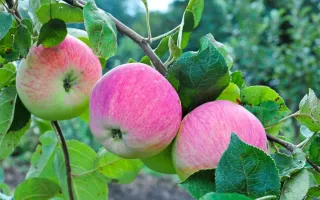
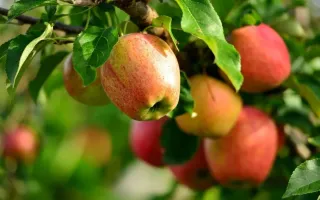
Fruits are exceptionally small (8-12 g), round-oval, occasionally slightly ribbed. Main color is yellow, covering color is dark red, solid. Skin has a bluish bloom, with a deep depression, often with radiating rust. Calyx is usually shed. Receptacle is wide, slightly ribbed. Calyx tube is conical.
Flesh is white, with reddish veins, tart-sweet, of good flavor. Chemical composition of fruit: total sugars — 11.9% (9.1-14.2), titratable acids — 1.31% (1.00-1.58), tannins — 395 mg/100g (124-580), ascorbic acid — 38.2 mg/100g (22.7-56.0), P-active compounds — 571 mg/100g (500-644), pectin substances — 6.15% dry weight.
Harvesting ripeness occurs at the end of August. Storage life up to 20 days. Variety is of universal use.
Fruit bearing begins on the 4th-5th year. Yield is average, fruiting is irregular. Cold hardiness is high. Drought tolerant. Sensitive to scab.
Advantages of the variety: high winter hardiness, early fruit ripening.
Disadvantages of the variety: exceptionally small fruits, sensitive to scab.
Varieties developed with its participation: Altai Red, Minusinsk Sinaap.
Crop & resistance
Crop
Specifications hover over for a hint about the specification
| Type of Sort | |
|---|---|
| Tree; Growth Power | |
| Fruit; Fruit Shape | |
|
Fruit; flesh color
Fruit; flesh color
Color of the fruit flesh. There are red, pink, yellow, and brown colors. |
|
| Fruit; Fruit Color (Base Color) | |
| Fruit; Blush (Blush Color) | |
| Fruit; Fruit mass | 8-12 |
| Fruit; Lying | 0.67 |
| Cold Resistance | |
| Catalog | Catalog → Apple |
Not yet комментариев. Be the first!
Alternatives
Apple saplings · similar varieties






See also
Often considered together with this variety


Golden Kurish Renet (Winter Golden Renet, Zolotarevka, Zolotorovsky Renet, Rogulevka)
01.3K 1 offer
4.24 € ≈ 219 ₴


Recently viewed
Products you’ve viewed on this site
Reviews · 0