


SKU #3495
·
366 views
Apple Renet Gromova
Apple
Prices in stores
No offers yet — stores have not added prices for this product yet.
Similar varieties with prices
All offers: Apple saplings
Type of Variety
Winter Apple Variety
Your mark
0 votes
0% positive ratings
Description
Winter variety from the Saratov Experimental Station of Horticulture and Saratov State Agrarian University named after N.I. Vavilov. Obtained by crossing Renet bergamot with McIntosh. Authors: G.V. Kondratyeva and I.K. Fomina.
Accepted for state variety trials in the Volga region and central part of Russia since 1997. The variety is widely grown in specialized, farm, and private garden plots in the Saratov region.
Medium-sized tree, with an inverted pyramid-shaped crown and average leafiness. Bark on the trunk is gray. Fruit-bearing type is mixed.
Shoots are thick, straight, brown-red, bare, with many buds, medium-sized. Buds are bent, medium-sized, elongated. Leaves are round, long-pointed, large, dark green, shiny, with serrated edges.
Flowers are large, 6 per cluster, buds rose-colored, petals broad-oval with a notch at the top, with clearly defined veins. Color is pale-pink.
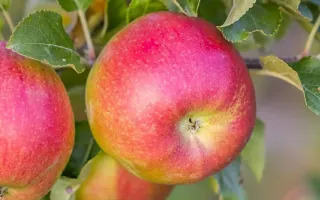
Fruits are single-seeded, weighing 140-150 g, flat-round, similar in shape to Renet bergamot. Skin is of medium thickness, shiny. Main color at harvest and consumer ripeness is greenish-yellow. Skin coloration: diffuse red blush over the entire fruit surface or over most of it. Subcutaneous dots are small and white. Peduncle is short, straight, slightly twisted, sometimes with a swelling. Calyx is small, medium width. Bitterness is weak. Receptacle is deep and narrow. Calyx does not fall off, closed; occasionally fruits with half-open calyx.
Flesh is firm, creamy, juicy. Taste is slightly sweet-sour (taste rating 4.2-4.5 points).
Early-bearing variety (produces first fruits by 4-5 years), with annual and high yield (up to 200 centners per hectare).
Winter-hardy variety; degree of freezing resistance in severe winters with minimum temperatures of -35°C (1978/79, 1988/89, 1995/96) — 0.8-1 point. Resistant to fungal diseases.
Advantages of the variety: high winter hardiness, early bearing, resistance to fungal diseases, fruit marketability.
Crop & resistance
Crop
Disease resistance
Specifications
| Type of Variety | |
|---|---|
| Catalog | Catalog → Apple |
No reviews yet. Be the first to share your experience.
Alternatives
Apple saplings · similar varieties



See also
Often considered together with this variety


Golden Kurish Renet (Winter Golden Renet, Zolotarevka, Zolotorovsky Renet, Rogulevka)
01.3K 1 offer
4.24 € ≈ 214 ₴


Recently viewed
Products you’ve viewed on this site
Reviews