


SKU #3513
·
218 views
Rublevoye
Apple
User rating
0 votes0% positive reviews
No ratings yet — be the first.
Type of Sort
Summer apple variety
Store offers · 1 from 1 stores
Prices are updated on loadLoading offers…
Available at: Posadka · Сади Буковини · Yaskrava Klumba
Aggregator catalog: prices are collected automatically from store websites, normalized by AI and converted at the current exchange rate. Before ordering, confirm the price and availability on the store's website. This block is not indexed by search engines — the data is loaded after the page opens.
About product

Late-ripening variety selected at the Primorsky Fruit and Berry Experimental Station, obtained by hybridizing Antonovka 600-gram and Ranecka purpura. Regionally approved for the southern zone of Primorsky Krai.
A vigorous tree with an oval (highly spherical) crown, which becomes somewhat wider and more spreading with age. Main branches have green-brown bark, initially raised upward, but eventu…
Type of Sort
Summer apple variety
Description
Late-ripening variety selected at the Primorsky Fruit and Berry Experimental Station, obtained by hybridizing Antonovka 600-gram and Ranecka purpura. Regionally approved for the southern zone of Primorsky Krai.
A vigorous tree with an oval (highly spherical) crown, which becomes somewhat wider and more spreading with age. Main branches have green-brown bark, initially raised upward, but eventually spread outward and are well covered with lenticels. Main fruiting is concentrated on three- to four-year-old wood. Fruiting often occurs on two-year-old wood as well.
Shoots with greenish-brown bark, usually curved. Leaves are bright green, medium-sized, elongated-oval in shape with serrated margins, slightly wrinkled surface, medium-length petioles with large lanceolate stipules.
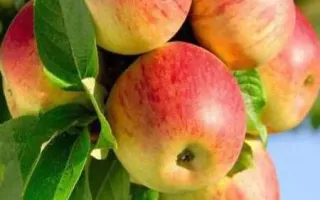
Fruits are medium to above-medium size (up to 140-170 g), oval-symmetrical in shape. Surface smooth and glossy. Main skin color is orange-red with a pinkish tint. Stem is short and medium-thick at the fruit’s apex.
Flesh is white with a creamy hue, juicy with a pleasant slightly tart-sweet flavor. Chemical composition of the fruit: total sugar — 12.7%, titratable acids — 0.85%, ascorbic acid — 23.6 mg/100g, P-active substances — 110 mg/100g, pectin substances — up to 10.3% on dry weight, tannins — up to 80 mg/100g.
Ripening period is late summer to autumn. Storage life is limited to 1.5 months. Fruits ripen asynchronously, limiting the variety’s use in commercial orchards.
Fruits have high flavor quality, excellent for fresh consumption, and remain good until mid-October.
Begins fruiting on the third to fourth year. Yield: 80-85 centners/ha. Winter hardiness of trees is below average.
Advantages of the variety: high commercial and consumer quality of fruits.
Disadvantages of the variety: tall tree, low resistance to moniliosis and bacterial canker.
The variety is especially valuable for home gardens and for selection to improve flavor qualities.
Crop & resistance
Crop
Specifications
| Type of Sort | |
|---|---|
| Catalog | Catalog → Apple |
Not yet комментариев. Be the first!
Alternatives
Apple saplings · similar varieties




See also
Often considered together with this variety



Recently viewed
Products you’ve viewed on this site
Reviews · 0