

Disease · bacterial · affects Alfalfa, Barberton daisy, Bilberry
Bacterial leaf spot
Pseudomonas cichorii
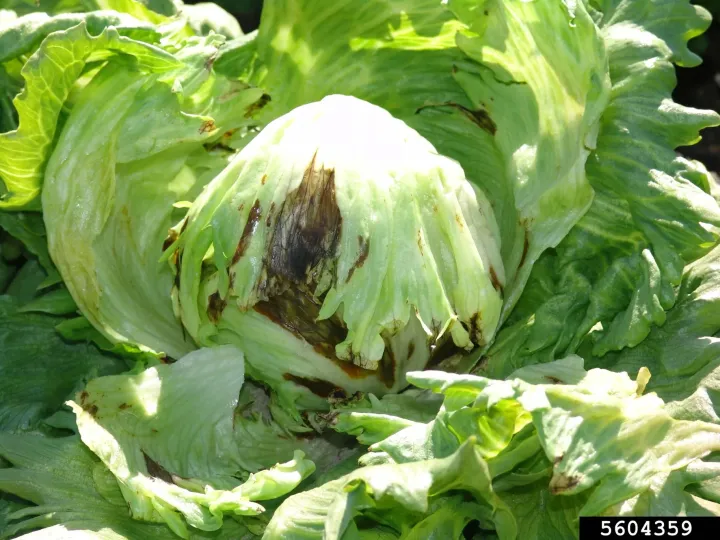
Description
Symptoms
Symptoms typically begin as small, water-soaked spots that progressively enlarge and turn dark brown or black as the tissue dies.
A characteristic halo of chlorotic (yellow) tissue often surrounds the necrotic lesions, serving as a key diagnostic feature of this bacteriosis.
Under conditions of high humidity, bacterial ooze can be observed on the surface of the lesions, often appearing as a milky or slimy substance.
The disease affects a wide range of hosts:
- Celery
- Fodder beet
- Winter rape
- Turnip
- Calceolaria
- Papaya
- Carnation
- Poinsettia
As the infection progresses, multiple spots may coalesce, leading to severe leaf blight, tissue deformation, and premature senescence of the foliage.
Pathogen
The causal agent of this disease is the Gram-negative bacterium Pseudomonas cichorii, which belongs to the Pseudomonadaceae family.
This pathogen has a remarkably wide host range, infecting various vegetable, field, and ornamental crops across diverse agricultural environments.
The bacterium is a plant parasite that enters plant tissues through natural openings like stomata or through wounds caused by weather or insects.
Once inside, it multiplies rapidly within the intercellular spaces, secreting toxins that break down plant cell walls and induce tissue necrosis.
The pathogen can survive between growing seasons in infected plant debris, soil, or even as a latent infection in certain plant seeds.
Conditions for development
Bacterial leaf spot development is heavily dependent on moisture; high humidity and prolonged leaf wetness are essential for disease progression.
The bacterium Pseudomonas cichorii thrives in moderate temperatures, with optimal growth occurring between +20°C and +28°C.
Rainfall, heavy fog, and dew provide the necessary film of water for bacteria to swim across the leaf surface and enter the stomata.
Poor ventilation in greenhouses or high-density field plantings creates stagnant air conditions that significantly accelerate the spread of the pathogen.
Plants weakened by environmental stress or mechanical damage from agricultural practices are significantly more susceptible to successful infection.
Why it matters
The economic impact of this disease includes significant yield losses due to reduced photosynthetic capacity of the plants.
In leafy vegetables, the damage renders the harvest unmarketable, while in root crops, stunted development leads to smaller, lower-quality produce.
Ornamental plants such as poinsettias or carnations suffer immense aesthetic damage, leading to total loss of commercial value for greenhouse producers.
Secondary infections often follow the initial bacterial damage, causing soft rots that can devastate stored harvest products in facilities.
If left unmanaged, the pathogen can spread rapidly throughout a field or greenhouse, potentially destroying a large portion of the crop within weeks.
Protection
The first line of defense is sourcing clean, certified seeds and selecting resistant plant varieties to limit the entry of the pathogen into the field.
Implementing a robust crop rotation program—avoiding host crops in the same area for several years—is crucial to reducing soilborne inoculum.
Regular monitoring and rapid removal of infected plant parts can significantly slow the secondary spread of the bacterium within a population.
Copper-based bactericides are the primary chemical control agents used to protect the leaf surface from successful colonization by the bacteria.
Greenhouse sanitation, including humidity control and avoiding overhead irrigation, is vital to prevent the creation of environments favorable to the disease.
In brief
22
Affects crops
Biology
Pathogens and affected parts
Pathogens
Pseudomonas cichorii· bacterium
Xanthomonas alfalfae· bacterium
Xanthomonas alfalfae· bacterium
Pseudomonas syringae· bacterium
Pseudomonas syringae· bacterium
Burkholderia andropogonis· bacterium
Burkholderia andropogonis· bacterium
Pseudomonas andropogonis· bacterium
Pseudomonas andropogonis· bacterium
Pseudomonas androponis· bacterium
Pseudomonas woodsii· bacterium
Acidovorax· bacterium
Affected plant parts
leaf
Content graph
Affects crops · 22
Content graph
Connections · Bacterial leaf spot
Most often together:
Marketplace
Products · 1
Community
Discussion
No discussions yet — be the first.