
Bacterial spot caused by Pseudomonas viridiflava
Pseudomonas viridiflava
Description
Symptoms
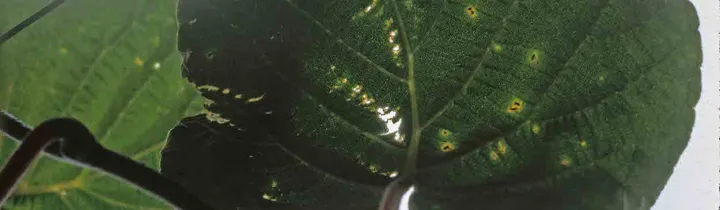
The primary symptom is the appearance of small, water-soaked spots that eventually darken. These spots often develop an angular shape, as the spread of the bacteria is restricted by the leaf veins.
Stems and petioles exhibit elongated, dark streaks or lesions that can lead to tissue deformation. Under conditions of high humidity, a bacterial exudate can be observed as cloudy droplets on the surface of the lesions.
Fruits, especially watermelons, develop sunken brown or black spots. This damage compromises the skin's integrity, frequently serving as an entry point for secondary fungal infections that accelerate fruit decay.
Seedlings infected at an early stage often show wilting and necrosis of the cotyledons, frequently leading to the total collapse and death of the plant before true leaves are fully formed.
As the disease progresses, the foliage yellows and dies, significantly reducing the plant's photosynthetic surface. This loss of vitality directly correlates with reduced sugar accumulation in the fruits and poor crop quality.
Pathogen
The causal agent is the Gram-negative bacterium Pseudomonas viridiflava, a well-known plant pathogen. This microorganism produces enzymes that degrade the plant cell walls, allowing it to feed and spread.
The bacterium penetrates plant tissues through natural openings like stomata or hydathodes, or via mechanical wounds caused by environmental factors or human activity. Once inside, it colonizes the intercellular spaces.
This pathogen is highly polyphagous, capable of infecting a wide variety of vegetable and fruit crops. It is particularly notorious for causing severe issues in cucurbits, including watermelons, cucumbers, and squashes.
Pseudomonas viridiflava is resilient, capable of surviving in soil, on crop debris, and on the surface of seeds for extended periods. It remains latent until favorable environmental conditions trigger its activation.
Transmission occurs through contaminated water, agricultural equipment, and insect vectors. The pathogen’s genetic diversity and adaptability allow it to successfully colonize different host species under varying conditions.
Conditions for development
The pathogen thrives in moderate temperatures combined with high relative humidity. The presence of free moisture (liquid water) on the leaf surface is a critical requirement for successful infection and colonization.
Rainfall, heavy fog, and dew provide the ideal environment for bacterial movement across the plant surface. Extended periods of leaf wetness significantly increase the severity of an outbreak.
Mechanical damage from hail, wind, or agricultural operations makes the plant highly susceptible to invasion. These injuries provide easy access for the bacteria to reach the plant's vascular and intercellular systems.
In greenhouse environments, poor ventilation, high planting density, and overhead irrigation are the primary drivers of disease. These conditions promote the condensation of water on foliage, facilitating bacterial spread.
While excess nitrogen fertilization weakens plant cell walls and immunity, it also creates a lush environment favored by the pathogen. A significant drop in humidity can temporarily halt bacterial growth, though it does not eliminate the pathogen from the tissues.
Why it matters
The major impact of this disease is the degradation of fruit marketability. For watermelons, bacterial spots result in unappealing blemishes that make them unsellable in commercial markets.
Infections can lead to significant yield losses, reaching up to 50% in severe cases. Weakened plants often cease development prematurely, resulting in smaller, underdeveloped fruits that lack flavor.
The disease depletes the plant's metabolic reserves, making it more susceptible to environmental stresses such as drought or heat. This leads to accelerated senescence and widespread crop decline.
Due to the latent nature of early-stage infection, producers often miss the window for effective control. The disease spreads in patches, rapidly consuming whole fields if not managed properly from the start.
Financial consequences include not only the loss of harvestable volume but also the high cost of persistent chemical control programs and the requirement for long-term quarantine of the affected land.
Protection
The most fundamental protection measure is the use of high-quality, certified pathogen-free seeds. Seed treatment with specific bactericides is recommended to prevent initial infection from the seed coat.
Strict crop rotation (at least 3–4 years) is essential to reduce the population of the pathogen in the soil. Thorough removal and disposal of all crop residues after harvest significantly lower the risk of future outbreaks.
Switching from overhead irrigation to drip irrigation is highly recommended to keep the foliage dry. Additionally, vigilant weed management is necessary, as many common weeds serve as reservoirs for the bacteria.
Copper-based fungicides are the standard chemical defense. These should be applied preventatively or at the very first signs of symptoms to create a protective layer on the plant surface.
- Select resistant varieties or hybrids whenever possible.
- Maintain balanced fertilization focusing on phosphorus and potassium.
- Regularly disinfect tools and machinery used in the field.
- Optimize plant spacing and greenhouse ventilation to ensure airflow.
Pathogens and affected parts
Affects crops · 1
Discussion
No discussions yet — be the first.