
Pseudomonas cichorii
Pseudomonas cichorii
Description
How to identify
Pseudomonas cichorii is a Gram-negative, rod-shaped, and motile bacterium belonging to the Pseudomonadaceae family. It is an aerobic, non-spore-forming pathogen characterized by its polar flagella, which allow for rapid movement in water films.
The bacterium is known for its wide host range, primarily affecting leafy vegetables, ornamental crops, and various horticultural plants. It is highly opportunistic and thrives in environments where moisture is easily accessible on plant surfaces.
In a laboratory setting, identification involves standard microbiological plating on selective media like King’s B agar to observe fluorescent pigment production, combined with biochemical profiling to confirm its specific carbon source utilization.
The biology of this pathogen includes a significant epiphytic phase, meaning it can reside on the healthy-looking foliage of plants as part of the normal microflora before environmental cues trigger its transition into an aggressive pathogenic state.
Genetic diversity within the species allows it to adapt to various climatic conditions, making it a persistent challenge in both commercial greenhouse production and open-field agriculture across different regions.
What it damages
This pathogen causes severe bacterial blight and spot diseases on a broad spectrum of crops, including lettuce, radicchio, celery, tomatoes, and chrysanthemums. Damage manifests as tissue necrosis, rendering the crop unmarketable.
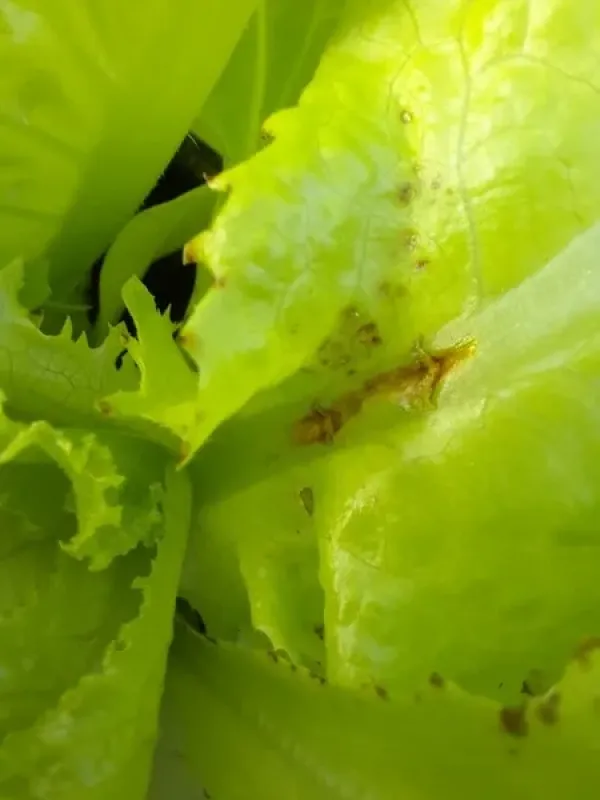
On salad greens, the infection leads to water-soaked, dark lesions that quickly expand across the leaf surface. If left unchecked, these lesions coalesce, causing the entire leaf to wither, which leads to significant yield losses in commercial production.
In ornamental plants like chrysanthemums, the bacteria cause necrotic spots on leaves and stems, significantly lowering the aesthetic value of the flowers and potentially leading to systemic wilting if the pathogen enters the vascular tissue.
Greenhouse-grown crops are particularly vulnerable due to high planting density and high relative humidity, which favor the rapid transmission of the pathogen from infected transplants to neighboring healthy plants.
Beyond crop loss, Pseudomonas cichorii can cause post-harvest decay, where seemingly healthy produce develops severe rot during storage and transit due to the latent presence of the bacteria at the time of harvest.
When it appears
The pathogen is most active during periods of warm, wet weather. Temperatures between +20°C and +28°C, combined with high humidity, are considered optimal for the rapid colonization and multiplication of Pseudomonas cichorii.
Rain events and heavy morning dews serve as primary triggers for disease outbreaks. In protected agriculture, overhead irrigation systems are the most significant factor in spreading the bacteria throughout the crop canopy.
The risk of infection persists throughout the entire growing season. However, periods of heavy growth or harvest preparation, when plants are handled frequently, are when the spread of the pathogen is most frequent due to physical contact.
Autumnal conditions, characterized by frequent fog and prolonged leaf wetness, create a perfect microclimate for the pathogen to thrive, often leading to late-season epidemics in crops that have not yet been harvested.
The survival of the pathogen through off-seasons is typically achieved by residing in soil debris or on wild weed hosts, which serve as reservoirs for re-infection during the subsequent spring planting season.
Signs of infestation
The initial signs of infection are small, water-soaked, translucent spots on the leaves. As the disease progresses, these spots darken to a brown or black color, often surrounded by a chlorotic halo caused by the production of phytotoxins.
Under conditions of high humidity, bacterial streaming or droplets of bacterial exudate can be observed on the leaf surface. This exudate eventually dries into a shiny film, which is a classic diagnostic sign of bacterial plant disease.
In advanced cases, leaf tissue around the lesions dies and may become brittle, leading to the tearing of leaves. When the infection is systemic, it causes the wilting of entire branches or seedlings as the plant's hydraulic system is compromised.
Stem infection is characterized by dark brown or black streaks. These lesions can extend deep into the plant tissue, forming cankers that serve as entry points for secondary opportunistic fungi and bacteria.
Flowers infected by the pathogen show rapid browning of petals and buds. This results in the premature senescence of the flower, making it useless for the florist market or as a garden plant.
Control measures
Management begins with strict sanitation practices, including the removal and destruction of crop residues, which are primary overwintering sites for the bacteria, and the use of pathogen-free seeds or certified transplants.
Implementing effective crop rotation is essential. Rotating away from susceptible crops for at least three to four years helps to reduce the inoculum levels in the soil, thereby lowering the probability of future outbreaks.
Transitioning from overhead irrigation to drip irrigation is a highly recommended practice. Keeping the foliage dry is the most effective way to inhibit the spread of the bacteria and reduce infection pressure in greenhouse environments.
Regular sanitation of tools and equipment is crucial to prevent mechanical spread. Personnel should be trained to handle only healthy plants first and to avoid working in fields when the foliage is wet.
Chemical control strategies focus on the preventive application of copper-based bactericides. While they cannot cure an established infection, they create a protective layer on the plant surface that prevents the initial colonization by the pathogen.
Causes diseases · 2
Discussion
No discussions yet — be the first.