
Burkholderia andropogonis
Burkholderia andropogonis
Description
How to identify
Burkholderia andropogonis is a Gram-negative aerobic bacterium belonging to the Burkholderiaceae family. It was previously classified as Pseudomonas andropogonis.
This organism is a significant phytopathogen capable of colonizing vascular systems and plant tissues. It persists effectively in crop debris and contaminated seed lots, remaining viable for extended periods.
Transmission occurs primarily through water splashes, wind-driven rain, and mechanical handling with infected tools. High humidity and moderate temperatures are the most favorable conditions for rapid bacterial spread.
Identification involves laboratory culturing on selective media where the bacteria form characteristic mucoid colonies. They are motile, rod-shaped microorganisms that exhibit resistance to several common plant antibiotics.
The host range is extensive, encompassing various monocots and dicots, which makes it a persistent challenge in both commercial field crops and ornamental nurseries.
What it damages
The primary agricultural target for this pathogen is maize, where it causes bacterial leaf stripe. Besides maize, it affects sorghum, carnations, coffee trees, and various other ornamental plants.
The pathogen infects leaves, stems, and sometimes buds. Field infections typically initiate on the lower foliage, with the disease progressing upward as the plant matures during the growing season.
The economic impact stems from significant reduction in photosynthetically active leaf area, causing plant stunting and reduced grain quality. Severe infections lead to substantial yield losses in susceptible varieties.
In ornamental production, particularly in carnations, the bacterium causes stem rot and wilting, often leading to total loss of commercial value for the affected batches.
Damaged tissues become entry points for opportunistic fungal pathogens, further complicating the disease progression and necessitating extensive chemical control measures.
Signs of infestation
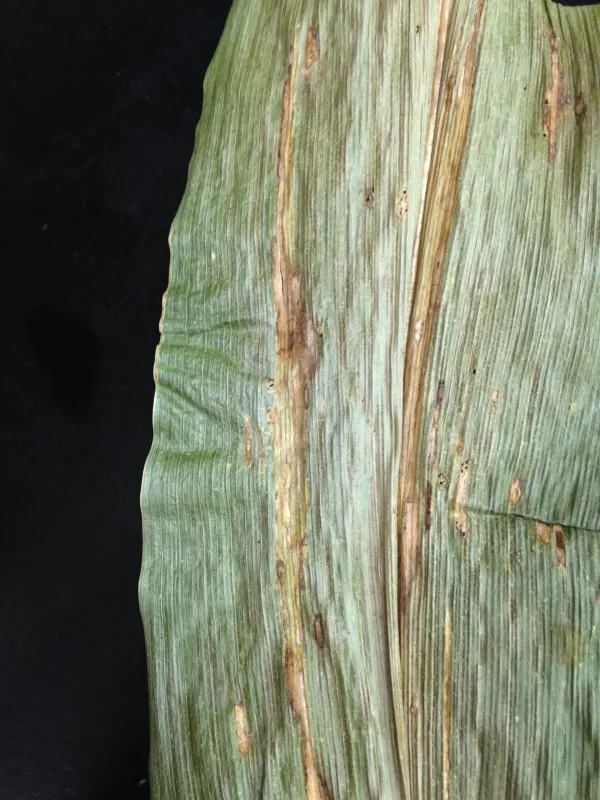
On maize leaves, the infection manifests as narrow, elongated stripes that range from reddish-brown to dark brown. These stripes can coalesce, covering large parts of the leaf blade over time.
A distinctive feature is the clear demarcation between the necrotic tissue and the healthy leaf, often surrounded by a chlorotic halo. Under high moisture, bacterial exudate may be visible on the surface.
Stem infections lead to cracking and ulceration. When cross-sectioned, the internal tissues often display a brownish discoloration, confirming the systemic movement of the bacteria through the xylem.
Carnations infected by this pathogen show severe wilting and yellowing of shoots. The base of the stem may turn mushy and dark, which is a classic symptom of the underlying bacterial decay.
General growth retardation and premature senescence of the lower leaves are common indicators of a systemic infection that limits the plant's ability to develop robust flowers or ears.
Control measures
Crop rotation is the most effective cultural practice, avoiding the planting of susceptible crops in the same field for at least two to three seasons to reduce soil-borne inoculum.
Using certified, disease-free seed is crucial for prevention. Seed treatment with appropriate bactericides is recommended to eliminate surface-borne contamination prior to sowing.
During the growing season, copper-based sprays are widely used to manage bacterial populations on the leaf surface and prevent the spread of the pathogen during wet weather.
Sanitation practices, including the removal of weeds that can act as alternate hosts and the destruction of infected plant material, significantly reduce the disease pressure in the field.
In greenhouse environments, maintaining optimal humidity and ensuring that all cutting tools are disinfected regularly is essential to prevent the spread of the bacteria from one plant to another.
Causes diseases · 1
Discussion
No discussions yet — be the first.