
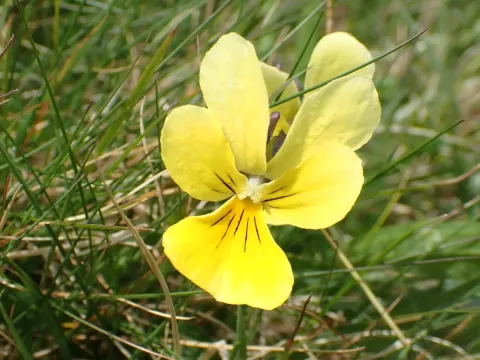
Yellow mountain pansy
Viola lutea
Yellow mountain pansy (Viola lutea) is a perennial herb belonging to the Violaceae family. It is native to the mountainous regions of Europe, where it thrives in grassy, high-altitude meadows.
What the section contains
Yellow mountain pansy
The botanical structure consists of a slender rhizome and vibrant yellow flowers, which are the hallmark of this species. The plant typically stays low-growing, making it a perfect candidate for specialized horticultural projects.
Climatic requirements favor cool, temperate environments. The species is well-adapted to high-altitude air pressure and humidity levels, but struggles in lowland areas with high summer heat and stagnant air.
Regarding soil preference, it requires well-drained, slightly acidic to neutral substrate. Rich, organic soil amendments can help improve growth, but the primary factor remains the prevention of waterlogging in the root zone.
In terms of utilization, it is primarily used in alpine gardening and botanical research. It serves as an indicator of pasture health in its native mountain ranges due to its specific environmental niche.
Fungal infections, such as leaf spot and grey mold (Botrytis), are significant threats to the foliage when air circulation is poor, particularly in humid garden climates.
Root rot is a major physiological challenge caused by excessive soil moisture and poor drainage. Ensuring a gravelly or sandy medium is essential for long-term survival.
Common pests like aphids and spider mites can colonize the plant during hot, dry spells, necessitating regular inspection of the undersides of the leaves.
Gastropods, including slugs and snails, are frequent visitors that can defoliate young plants if left uncontrolled in the early spring planting season.
Effective management includes removing dead plant debris regularly and ensuring that the planting site has enough sun exposure to dry out the dew efficiently.