
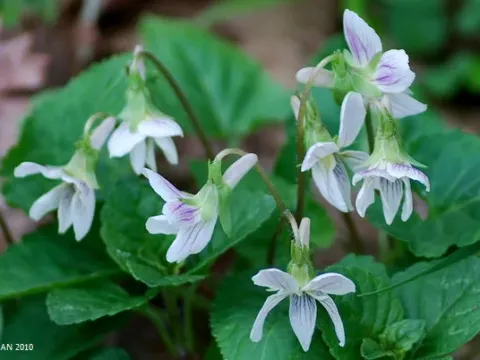
Yezo violet
Viola yezoensis
The Yezo violet (Viola yezoensis) is a perennial herbaceous plant belonging to the Violaceae family. It is native to the temperate regions of East Asia, where it thrives in cool, forested environments.
What the section contains
Yezo violet
Successful cultivation requires soil that is rich in organic matter and possesses excellent drainage. A slightly acidic to neutral substrate mixed with organic compost provides the best environment for root establishment and health.
This species is well-adapted to partial shade conditions. Exposure to direct, harsh sunlight should be avoided to prevent leaf scorching and desiccation, making it an excellent choice for woodland garden edges or rockeries.
Watering needs must be managed carefully; the soil should remain consistently moist but never waterlogged. During dry spells, supplemental irrigation is necessary to maintain the plant's metabolic activity.
In landscaping, the Yezo violet is valued for its delicate ornamental foliage and charming blooms. It serves effectively as a ground cover in shaded areas where other flowering plants might struggle to survive.
The primary health issues for Viola yezoensis are fungal in nature, often triggered by poor aeration or excessive humidity. Powdery mildew, characterized by white spots on the leaves, is the most common fungal ailment.
Root rot and crown rot are severe threats caused by stagnant water in the soil. To prevent these, planting sites should be slightly elevated or amended with coarse sand to facilitate efficient water movement.
Slugs and snails are the most prominent pests, particularly during the rainy season when they graze on tender foliage. Barrier methods, such as crushed shells or specialized traps, are recommended for organic control.
Aphids can occasionally colonize flower stalks, resulting in stunted blooms. If infestations occur, a gentle wash with insecticidal soap is typically sufficient to mitigate the damage without harming the plant.
Integrated pest management strategies involve maintaining good hygiene in the garden, such as clearing debris from around the base of the plants, which helps to remove hiding places for common pests and pathogens.