
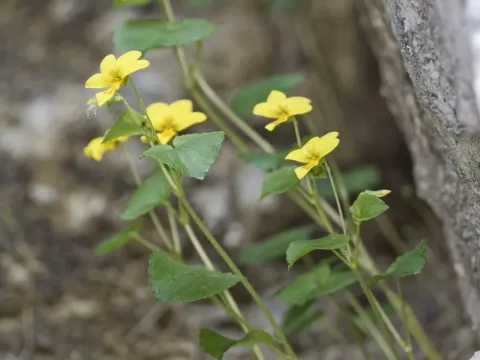
Yellow wood violet
Viola biflora
The yellow wood violet (Viola biflora) is a perennial herbaceous plant belonging to the Violaceae family. It is a circumboreal species well-adapted to cool, mountainous environments across the Northern Hemisphere.
What the section contains
Yellow wood violet
Botanically, the plant is distinguished by its fragile stem, usually bearing two vivid yellow flowers with dark veining. It typically grows to a height of about 5 to 20 centimeters, forming small clumps in its natural habitat.
The species is commonly found in damp, shady areas such as subalpine forests, rocky crevices, and moist alpine meadows. Its distribution is closely linked to cool soil temperatures and consistent moisture levels throughout the growing season.
Optimal growing conditions require an organic-rich, moist, and well-drained substrate. It is essential to protect the plants from extreme heat and direct sunlight, as they are specifically evolved for shady microclimates.
While not a traditional agricultural crop, Viola biflora is highly valued in horticulture for rock gardens and woodland settings where specialized alpine flora can be properly maintained.
Fungal pathogens such as mildew and root rot represent the primary threats to plant health, especially in poorly ventilated environments with stagnant humidity.
In terms of pests, mollusks like slugs and snails are particularly problematic, as they are attracted to the succulent foliage of the violet in shaded, humid garden beds.