
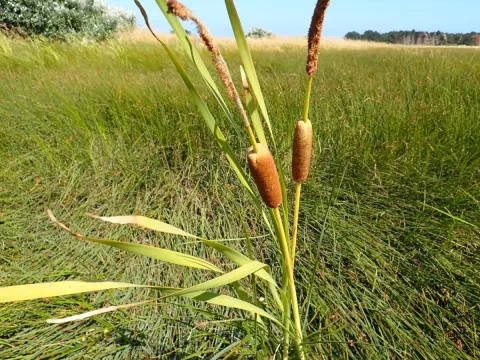
Oriental cattail
Typha orientalis
Oriental cattail (Typha orientalis) is a robust perennial aquatic plant belonging to the Typhaceae family. While it can reproduce via seeds, industrial cultivation is typically performed through the vegetative division of rhizomes to ensure genetic uniformity and faster establishment.
What the section contains
Oriental cattail
Planting of rhizome sections is best performed in the early spring once water temperatures rise to approximately 12–15 degrees Celsius. This timing allows the root system to establish itself firmly before the peak of the summer growth season.
When propagating by seed, it is essential to provide a moist, muddy substrate. Seeds are wind-dispersed, so they should be protected from water currents during the initial germination phase in nursery beds or controlled wetland zones.
For commercial plantations aimed at wastewater treatment, high-density planting is recommended to facilitate rapid biomass accumulation and effective nutrient uptake from the water column.
New plantation plots should be established during the plant's dormant phase or at the very onset of spring growth to minimize transplant shock and encourage vigorous shoot development.
Oriental cattail is highly demanding regarding moisture levels. It is an obligate wetland plant, thriving best in shallow waters, flooded zones, and saturated soils with high water tables.
The plant exhibits high ecological plasticity and is exceptionally efficient at extracting dissolved nutrients like nitrogen and phosphorus from the water, making it a valuable tool for phytoremediation.
Full solar exposure is critical for optimal growth. Shaded environments significantly reduce the photosynthetic rate, leading to stunted shoot development and lower overall biomass yields.
The species is well-adapted to temperate and subtropical climates and demonstrates significant winter hardiness, provided that the rhizomes remain protected beneath a layer of ice or saturated mud.
Preferred soil types are silty or organic-rich substrates with a neutral to slightly acidic pH, which support the nutrient requirements needed for the plant's intense vegetative production.
The biomass yield of Typha orientalis is substantial. Under ideal conditions, a single plant can produce dense stands reaching up to 2.5 meters in height, contributing to significant yearly harvest volumes.
Routine annual harvesting of the aerial parts is recommended to promote new growth and maintain the plant's active nutrient uptake, which is essential for water quality management.
Harvested biomass is versatile, serving as a feedstock for cellulose production, traditional weaving materials, or processed into fuel briquettes for renewable bioenergy applications.
Yield metrics are highly dependent on the trophic status of the water body; eutrophic conditions provide an abundance of nutrients that drastically increase the rate of biomass accumulation.
Managed harvesting prevents the excessive accumulation of organic detritus at the bottom of the water body, which helps to mitigate long-term issues such as siltation and methane release.
Fungal pathogens such as rust and various leaf spots are the most common health issues, particularly in overcrowded stands where air circulation is restricted.
Insect pests, including aphids and certain larval species, can inflict damage on tender young shoots, potentially reducing the overall vigor of the plantation during the spring months.
Competition from invasive species or other common reeds can inhibit the growth of oriental cattail; thus, site preparation and initial weeding are vital for establishing a successful crop.
Environmental stressors, particularly heavy metal contamination beyond the plant's tolerance threshold, can lead to rhizome degradation and reduced resistance to natural pathogens.
Effective management includes maintaining appropriate water levels and removing dead plant debris to minimize the habitat for pathogens, ensuring the long-term health of the crop.
The harvest should occur at the end of the growing season when the leaves begin to yellow and lose moisture. This timing maximizes the biomass quality for industrial or fuel processing.
Mechanical harvesting techniques, such as using amphibious vehicles or specialized aquatic mowers, are often employed for large-scale operations to ensure efficiency across wetland areas.
Following the cutting process, biomass is typically left on the banks to undergo natural drying, which reduces the moisture content and simplifies transport and storage logistics.
It is important to leave a stubble height of at least 10–15 centimeters above the water level, which allows for oxygen exchange through the stalks, crucial for the rhizome's survival during winter.
Post-harvest procedures include sorting the material based on its end-use, ensuring that only quality biomass is moved to the processing facility for conversion into fibers or energy pellets.