
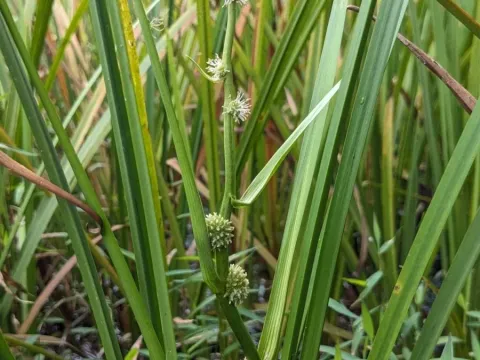
Sparganium fallax
Sparganium fallax
Sparganium fallax is a perennial aquatic plant belonging to the Typhaceae family. It is commonly found in marshy habitats, shallow ponds, and along the banks of slow-moving streams, where it forms dense stands.
What the section contains
Sparganium fallax
The plant features long, linear leaves and distinct globular fruit clusters, which give the genus its common name. The root system is rhizomatous, allowing the plant to spread effectively through soft, water-saturated sediments.
Environmental requirements for this species include high water availability and nutrient-rich, silty substrates. It thrives in locations with consistent moisture, making it unsuitable for cultivation in standard drained fields.
Climatic conditions should favor temperate to subtropical environments, with adequate sunlight being crucial for photosynthesis and the development of reproductive structures.
Agrotechnical management focuses on water level control. Maintaining a stable hydraulic regime is essential for the health of the population, preventing both excessive desiccation and deep flooding that could stunt growth.
Agricultural use of Sparganium fallax is primarily centered on its role in phytoremediation and as a source of organic biomass in wetlands. It helps stabilize soils and improve water quality by absorbing excess nutrients.
Harvesting is typically performed during the peak of the growing season. Methods must be non-destructive to the rhizomes to ensure long-term productivity of the wetland site.
The biomass harvested can be processed into silage for livestock, provided it is handled correctly to remove excess moisture and prevent mold formation during the drying stage.
Regular maintenance of these stands involves thinning to prevent overcrowding, which can lead to reduced plant vigor and stagnant water conditions.
Strategic harvesting cycles ensure the sustainability of the harvest while maintaining the ecological functions of the aquatic environment where the plant is cultivated.