
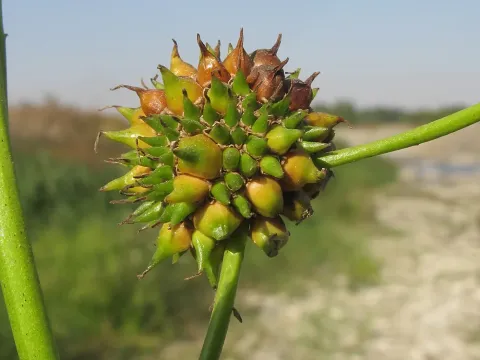
Sparganium stoloniferum
Sparganium stoloniferum
Sparganium stoloniferum, commonly known as the bur-reed, is a perennial aquatic or semi-aquatic plant belonging to the Typhaceae family. It is widely distributed across temperate regions of the Northern Hemisphere.
What the section contains
Sparganium stoloniferum
This species is highly adapted to wetland environments, including the margins of ponds, slow-moving streams, and marshes. It thrives in soils characterized by high organic content, such as silt and peat, which provide essential nutrients.
The plant features long, creeping rhizomes that facilitate rapid spread and soil stabilization. The erect, strap-like leaves are reinforced with a central rib, allowing the plant to resist water flow and wind pressure effectively.
Optimal growth occurs in well-lit, shallow-water zones where the plant can access consistent moisture levels. It demonstrates significant resilience to fluctuating water levels, which is a key advantage in seasonal wetlands.
To establish a healthy crop, growers should ensure an appropriate hydrological regime. While it tolerates various soil types, its productivity is maximized in nutrient-rich sediments with a neutral to slightly acidic pH.
The primary agricultural use of Sparganium stoloniferum is the production of biomass. Its rapid growth cycle allows for harvesting significant quantities of green matter suitable for livestock forage or organic fertilizer.
In various regions, the plant is valued for its phytoremediation capabilities, serving to filter nitrogen and phosphorus from agricultural runoff. This dual role as a crop and an environmental tool makes it valuable in aquaculture.
The starch content of the rhizomes suggests potential for industrial or nutritional applications. When harvested at the right phenological stage, the biomass provides a reliable supply of raw material for soil improvement projects.
Yield management requires careful monitoring of plant density and water depth. By managing these parameters, growers can prevent overcrowding, which would otherwise lead to a decline in leaf quality and biomass density.
Harvesting is typically done in mid-to-late summer when the plant biomass reaches peak volume but before the onset of senescence. Proper equipment is required to maintain the integrity of the rhizome system for regrowth.
Bur-reed populations are susceptible to herbivory by various aquatic insects and larvae. These pests can significantly reduce the photosynthetic surface area, impacting overall plant development and biomass yield.
Fungal diseases, including leaf spot and root rot, present risks, especially in stagnant or poorly ventilated water conditions. These pathogens can spread rapidly if humidity levels remain excessively high.
Competition from invasive species such as common reed or cattail is a major threat. Without proper management, these aggressive plants can outcompete Sparganium stoloniferum for space and sunlight.
Environmental stressors, particularly water pollution, can impair the plant's physiological functions. Toxic accumulation can render the biomass unsuitable for agricultural feed, necessitating periodic water quality testing.
Effective management strategies involve monitoring for signs of infestation and ensuring adequate water movement. Chemical interventions are rarely used due to the sensitive nature of aquatic ecosystems, favoring manual or mechanical removal.