
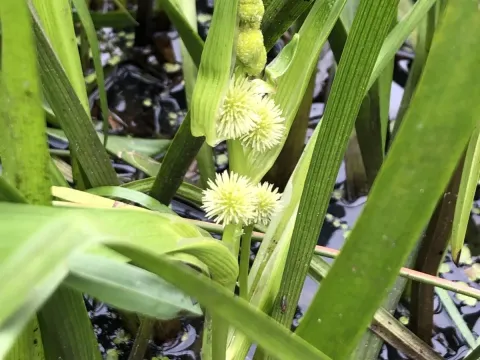
Unbranched bur-reed
Sparganium emersum
The Unbranched bur-reed (Sparganium emersum) is a perennial aquatic plant belonging to the Sparganiaceae family. Native to temperate regions of the Northern Hemisphere, it commonly inhabits freshwater wetlands, riverbanks, and pond margins.
What the section contains
Unbranched bur-reed
This species thrives in water depths ranging from 10 to 60 centimeters. It is highly adaptable to various water movement regimes, though it prefers slow-flowing or stagnant nutrient-rich waters where it can anchor effectively into silty substrates.
Environmental conditions require significant sunlight for optimal biomass production. The plant is hardy and well-adapted to temperature fluctuations, entering dormancy during the winter months and sprouting vigorously in early spring.
From an agronomical perspective, it acts as an essential component in constructed wetlands. Its ability to sequester nutrients like nitrogen and phosphorus makes it a prime candidate for water purification and site remediation projects.
Cultivation practices involve transplanting rhizomes into protected areas of water bodies. The crop requires minimal intervention once established, provided the hydrological parameters remain within its tolerance range.
The crop is generally robust, but it can be affected by various insect larvae that feed on the leaf blades and stems. Monitoring these populations is crucial in intensive cultivation setups to maintain plant health.
Fungal infections, such as leaf spot diseases, can occur if the water quality deteriorates or if there is excessive crowding of plants, leading to poor aeration and moisture accumulation on the foliage.
Root rot caused by stagnant conditions and lack of oxygen in the sediment is a potential threat. Ensuring adequate water turnover is the best preventative strategy against such pathogens.
Competition from aggressive aquatic weeds can significantly reduce the yield of the bur-reed. Manual thinning or ecological management is often necessary to sustain the dominance of the crop.
Management of pests should focus on physical or biological control methods to avoid contaminating the water ecosystem, as the plant is often part of a wider habitat for local wildlife.