
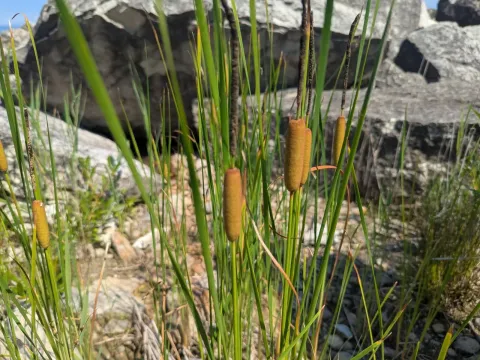
Laxmann's bulrush
Typha laxmannii
Laxmann's bulrush (Typha laxmannii) is a perennial herbaceous plant belonging to the Typhaceae family. Native to regions spanning from Central Europe to Eastern Asia, this species is typically found in marshes, along riverbanks, and in other wetland ecosystems where it plays a critical role in local biodiversity.
What the section contains
Laxmann's bulrush
The botanical structure is marked by its slender, elongated leaves and unique cylindrical flower spikes. Unlike larger members of the genus, Typha laxmannii is more compact, typically reaching heights between 80 and 130 centimeters, which makes it highly suitable for various aquatic landscape installations.
This crop thrives in shallow water environments with a depth ranging from 0 to 20 centimeters. It demands significant sunlight to maintain optimal growth rates and structural integrity, as shade exposure often results in weak stems and reduced flower production, impacting the plant's overall viability.
The preferred soil substrate consists of silty or nutrient-rich clay soils capable of supporting extensive rhizome growth. Providing a stable substrate is essential for the crop, as the root system acts as an anchor and a primary nutrient absorption mechanism in varying hydrologic conditions.
In terms of practical utility, this plant is increasingly used for phytoremediation and biofiltration. Its ability to absorb nutrients like phosphorus and nitrogen from water makes it an excellent choice for constructed wetlands, which are designed to improve water quality in both agricultural and urban settings.
Common diseases affecting Laxmann's bulrush include fungal infections such as rust and leaf spot, which are often exacerbated by poor air circulation and stagnant water conditions. These pathogens can significantly diminish the plant's aesthetic value and physiological health if left unmanaged.
Pest pressures are generally linked to various insects, including stem-boring moths and aphids that feed on the succulent parts of the plant. Monitoring the presence of these pests is essential, especially in dense plantations where an infestation can spread rapidly across the entire site.
Preventative maintenance involves ensuring adequate spacing between individual plants to promote airflow. This simple practice reduces the humidity around the leaf blades, which is often the primary trigger for the development of opportunistic fungal spores and bacterial colonies.
Integrated pest management strategies should favor biological controls over synthetic chemicals to protect the surrounding aquatic environment. Introducing natural predators or using targeted biological agents ensures that the health of the plant is maintained without polluting the water body.
Seasonal harvesting of dead biomass is a critical cultural practice. By clearing out the brown, decaying stalks at the end of the growing season, growers can effectively eliminate overwintering sites for insects and reduce the load of pathogens that could emerge in the spring.