
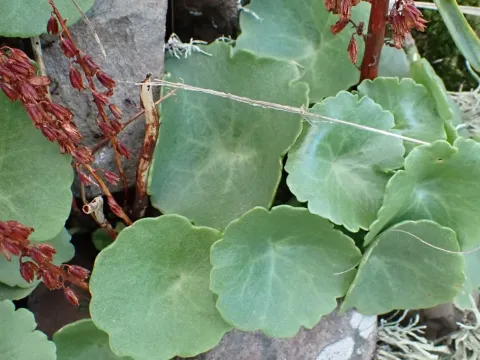
Umbilicus neglectus
Umbilicus neglectus
Umbilicus neglectus, a member of the Crassulaceae family, is a distinct succulent plant that exhibits remarkable physiological adaptations to arid environments. As a perennial species, it thrives by efficiently storing water in its thickened, fleshy leaves.
What the section contains
Umbilicus neglectus
The plant originates from the Mediterranean basin, where it typically colonizes rocky outcrops, cliff crevices, and arid slopes. Its natural distribution is characterized by regions with mild winters and hot, dry summers, which dictates its specific environmental preferences.
Botanically, it features a basal rosette of rounded, peltate leaves and produces an upright, terminal raceme of small, bell-shaped flowers. The inflorescence is a key identification feature, usually displaying yellow or pinkish tones that attract pollinators in its native habitat.
Successful cultivation requires a well-draining, gritty soil mix that mimics the natural rocky conditions of its native range. It is essential to avoid nutrient-rich soils that retain moisture, as these promote rank, weak growth and increase susceptibility to environmental stress.
In practice, Umbilicus neglectus is primarily utilized in xeriscaping and alpine gardening. Its ability to tolerate low-maintenance conditions makes it an excellent choice for rock gardens where irrigation is limited and the gardener seeks drought-resistant plant alternatives.
The primary threat to the vitality of Umbilicus neglectus is waterlogging, which inevitably leads to root rot and collar decay. Maintaining a dry substrate, especially during the dormant season, is critical for the long-term health of the plant.
In terms of pests, mealybugs and spider mites are frequent invaders, particularly in greenhouse conditions or indoor environments. These pests tend to colonize the base of the leaves and the flower stalks, causing stunted development and leaf discoloration.
Gastropods, such as snails and slugs, can cause significant damage to young rosettes in open-air settings. Protective measures, including the application of gravel mulches around the base of the plant, can help mitigate these infestations by creating a deterrent barrier.
Fungal pathogens like Botrytis may infect the plant if humidity levels rise too high without adequate ventilation. Ensuring constant airflow around the plant's rosettes is the most effective cultural practice for preventing the onset of these diseases.
To ensure disease resistance, it is recommended to monitor the plant for any signs of softening tissue or darkened spots on the foliage. Early removal of infected leaves and adjustment of watering schedules are vital to preventing the spread of infection throughout a collection.