
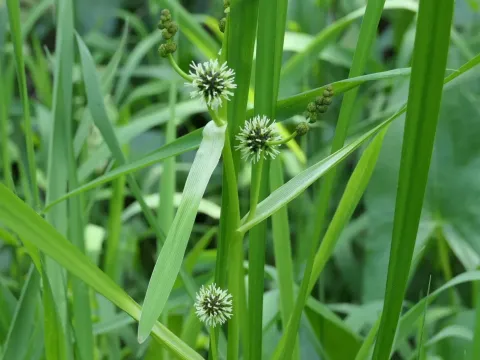
Giant bur-reed
Sparganium eurycarpum
Giant bur-reed (Sparganium eurycarpum) is a perennial wetland plant belonging to the Typhaceae family. It is widely distributed across North America, thriving in marshes, shallow lakes, and along the muddy banks of rivers and streams.
What the section contains
Giant bur-reed
The plant requires saturated soils and consistent moisture levels to thrive, typically growing in water depths ranging from 10 to 60 centimeters. It is known for its preference for nutrient-rich, organic sediments that support its vigorous rhizomatous growth.
Botanically, it is characterized by tall, stiff, sword-shaped leaves that emerge vertically from the water. Its unique spherical flower heads, which give the plant its name, develop during the summer months, leading to the formation of burs containing numerous seeds.
In terms of ecological application, Sparganium eurycarpum is highly valued for its phytoremediation capabilities. It efficiently absorbs excess nutrients from agricultural runoff, helping to maintain water quality in constructed wetlands and managed drainage systems.
The plant is also an essential component of wildlife habitats, providing nesting sites for waterfowl and essential cover for amphibians and aquatic invertebrates. Its presence is often a sign of a healthy, functioning aquatic ecosystem.
The primary threats to Giant bur-reed include fungal infections that manifest in stagnant water environments, causing leaf necrosis. These conditions are usually exacerbated by poor water circulation or high humidity levels.
Specific aquatic pests, including larvae that feed on the foliage, can cause significant damage to the plant's surface area. While mature stands are generally resilient, young plants can be severely stunted by heavy infestations.
Invasive non-native plant species often pose a major competitive threat, displacing Giant bur-reed and altering the local hydrology. Successful management requires the selective removal of these invasive competitors to maintain stand density.
Pollution from agricultural chemicals, specifically herbicides, can have detrimental effects on root development and overall plant vitality. Such contaminants accumulate in the sediment, potentially leading to long-term population decline.
Water level stability is crucial; drastic changes can wash away young plants or expose rhizomes to air, leading to dehydration. Consistent water monitoring is a necessary component of the plant's agrotechnical management.