
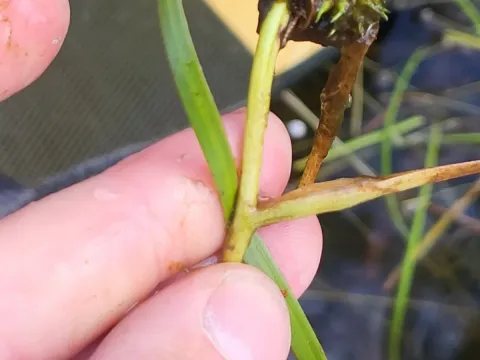
Floating bur-reed
Sparganium fluctuans
Floating bur-reed, known botanically as Sparganium fluctuans, is a perennial aquatic plant belonging to the Typhaceae family. It is distinct for its elongated, ribbon-like leaves that float on the water surface, providing essential structure in temperate freshwater habitats.
What the section contains
Floating bur-reed
This species thrives in nutrient-rich, soft, or silty substrates found at the bottom of ponds, lakes, and slow-moving streams. Unlike terrestrial crops, its success depends heavily on the clarity of the water, which allows for optimal photosynthetic activity of its submerged and floating parts.
The plant is native to northern regions of North America and parts of Eurasia, showing a remarkable ability to survive in cold climates. It remains dormant during the winter, with its rhizomes protected by the depth of the water and mud.
Agricultural application of Sparganium fluctuans is primarily focused on wetland restoration and as a biological tool for water quality management. Its ability to sequester nutrients makes it valuable for filtering runoff in constructed aquatic ecosystems.
To cultivate this plant successfully, one must maintain stable water levels and monitor the nutrient composition of the pond. While it does not require typical fertilization, the presence of organic matter in the substrate is essential for its vegetative growth.
The primary diseases affecting Floating bur-reed include fungal pathogens that manifest as leaf spotting. These infections are often triggered by high humidity and poor water circulation around the plant colonies.
Pest pressure is mainly exerted by aquatic insects, including certain beetle species that graze on the foliage. Heavy infestations can lead to significant biomass loss, especially during the peak growing season in mid-summer.
Competition from aggressive invasive aquatic weeds is a critical threat. Because Sparganium fluctuans has a specialized niche, it can easily be outcompeted by faster-growing species that modify the water chemistry.
Water pollution, particularly the influx of synthetic herbicides from adjacent agricultural lands, is toxic to this species. Exposure can lead to immediate chlorosis of the leaves followed by the systemic failure of the entire root structure.
Rapid changes in water depth, caused by human-led water management or drought, can lead to the desiccation of the plant. Since it is an obligate hydrophyte, any prolonged exposure to air usually results in irreversible tissue damage.