
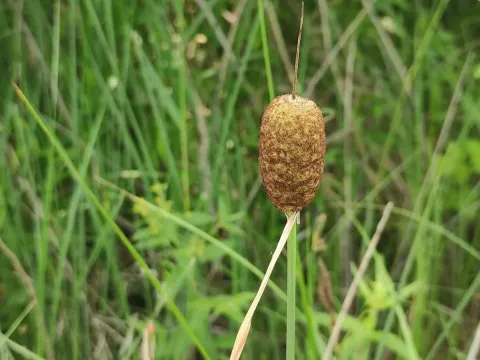
Dwarf bulrush
Typha minima
Dwarf bulrush (Typha minima) is a perennial aquatic plant belonging to the Typhaceae family. As the smallest member of its genus, it is highly sought after by water gardeners for its graceful, slender foliage and distinct, globular seed heads.
What the section contains
Dwarf bulrush
Originating from temperate regions of Europe and Asia, it typically colonizes the edges of streams, pond margins, and shallow marshes. It thrives in locations with full sunlight, which is necessary to maintain its compact habit and vibrant leaf color.
This species is well-adapted to damp, muddy, or sandy substrates. It performs best in nutrient-rich pond soil, though it can tolerate a wide variety of moisture levels. It is significantly less invasive than its larger relatives, making it suitable for smaller gardens.
Agrotechnical maintenance includes thinning out overgrown rhizomes if the plant begins to spread beyond its designated space. Planting in aquatic baskets or containers is the most recommended strategy to keep the plant contained and maintain the aesthetic balance of the water feature.
From an ecological perspective, it serves as a natural filter, absorbing excess nitrates and phosphates from pond water. Its roots provide essential cover and shelter for aquatic insects and small organisms, contributing to a balanced pond ecosystem.
While robust and resilient, the dwarf bulrush can be susceptible to rust fungi, especially in areas with stagnant air and high humidity. These infections appear as orange or brown spots on the leaves, which can decrease the plant's ornamental appeal.
Insects like aphids can occasionally cluster on the flower heads during hot, dry spells. Furthermore, certain leaf-mining larvae may cause cosmetic damage, which, while rarely killing the plant, necessitates monitoring and early intervention.
To minimize disease, gardeners should focus on proper hygiene. Removing and disposing of old, decaying foliage before the onset of winter prevents the buildup of fungal spores and ensures that the plant enters the new season in a healthy state.
Environmental stress, such as severe fluctuations in water level or extreme pollution, can weaken the plant's resistance. Providing a stable environment is the most effective form of preventative care for any aquatic planting.
Control of pests should strictly avoid chemical applications. Utilizing beneficial insects or manual removal of damaged leaves is the preferred approach to maintaining the safety and health of the pond's biological community.