
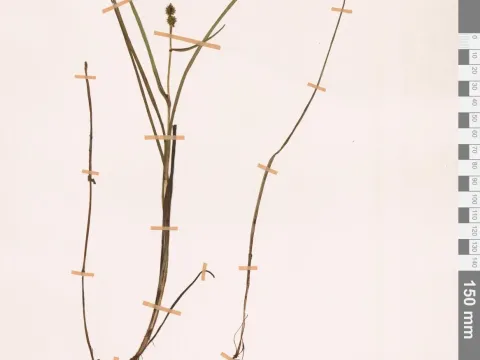
Grass-leaf bur-reed
Sparganium gramineum
The Grass-leaf bur-reed (Sparganium gramineum) is a member of the Typhaceae family, highly adapted to shallow aquatic and wetland environments.
What the section contains
Grass-leaf bur-reed
The species is native to northern temperate regions, where it thrives in quiet, shallow water bodies with nutrient-rich silty or muddy substrates.
Environmental conditions require stable water levels throughout the growing season to ensure that the plant maintains its physiological functions.
Botanically, it is distinguished by its long, thin, grass-like foliage that allows the plant to remain submerged while maximizing photosynthesis in low-current waters.
For successful cultivation in artificial wetlands, the soil must be kept saturated, and the water pH should generally be neutral or slightly acidic.
While not a traditional food crop, the plant serves as a vital component in managed water ecosystems and ecological restoration projects.
In terms of bio-productivity, it acts as a filter, sequestering excess nutrients and helping to maintain clear water in natural and artificial ponds.
It provides habitat complexity, which is essential for biodiversity, supporting micro-organisms and insects that form the base of the food web.
In specific ecological applications, the species is harvested for use in constructing floating rafts or bank stabilization zones to prevent soil erosion.
Its role in wildlife management is significant, as it provides nesting material and sanctuary for aquatic bird species in protected wetland areas.
The primary threats include industrial water pollution, which often leads to the accumulation of heavy metals within the plant's vascular system.
Fungal pathogens and water-borne viruses can cause stem rot, particularly in stagnant environments with low oxygen levels during warmer months.
Invasive non-native aquatic plants often compete for light and space, frequently outcompeting Sparganium gramineum in disturbed habitats.
Extreme hydrological changes, including artificial lowering of water tables, represent a major risk to the viability of local colonies.
Mechanical disturbance from dredging or recreational water activity often disrupts the root zones, leading to site degradation and loss of growth.