
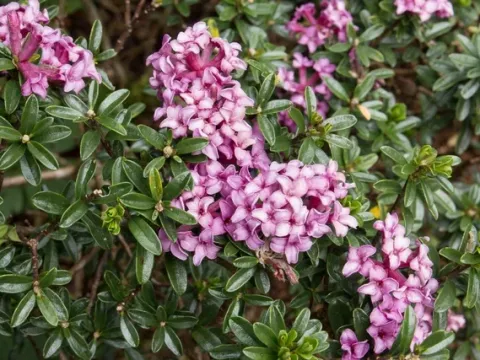
Daphne rollsdorfii
Daphne rollsdorfii
Daphne rollsdorfii is a notable species within the Thymelaeaceae family, prized by gardeners for its compact habit and fragrant, early-spring blossoms. This hybrid is highly sought after for rock gardens and small ornamental landscapes due to its slow-growing and neat appearance.
What the section contains
Daphne rollsdorfii
The plant requires well-drained, fertile soil, ideally with a neutral to slightly alkaline pH. Drainage is paramount; planting on a slight slope or creating a gravel-based substrate helps prevent root rot, which is the most common cause of failure for this species.
Regarding climate, this shrub thrives in temperate conditions with protection from harsh, drying winds. While it is generally cold-hardy, it prefers a semi-shaded position where it can avoid the scorching heat of the midday sun, ensuring consistent soil moisture throughout the summer.
Good horticultural practice for this Daphne involves light mulching to maintain soil temperature and moisture levels. Fertilizer should be applied sparingly, as the plant does not require high levels of nutrition; a balanced, slow-release organic fertilizer in early spring is usually sufficient.
In terms of usage, Daphne rollsdorfii serves as an excellent specimen for low-maintenance garden designs. Its fragrance is intense and fills the immediate surrounding area, making it a perfect candidate for planting near pathways or garden entrances where the scent can be fully appreciated.
The primary threats to this plant are fungal pathogens related to excessive moisture, particularly Phytophthora species. Ensuring perfect soil aeration and avoiding overhead watering are essential preventative measures to keep the root system healthy.
Insect pests, specifically aphids and spider mites, can occasionally affect the foliage. Regular inspections, especially during the spring growth flush, allow for early intervention using horticultural oils or soaps before the infestation becomes severe.
Gardeners must exercise caution, as all parts of the Daphne plant are toxic if ingested and the sap can cause skin irritation. Always wear gloves during pruning and cleaning operations to prevent accidental contact with the plant tissue.
Nutritional imbalances, such as iron deficiency, can manifest as interveinal chlorosis. If the soil pH rises too high, the plant may struggle to uptake necessary nutrients; maintaining the correct soil chemistry is vital for preventing this physiological disorder.
During the winter, severe frost heave or desiccation can damage younger specimens. Providing a layer of winter mulch and perhaps a light screen against prevailing winds will ensure the shrub survives the dormant period without significant dieback.