
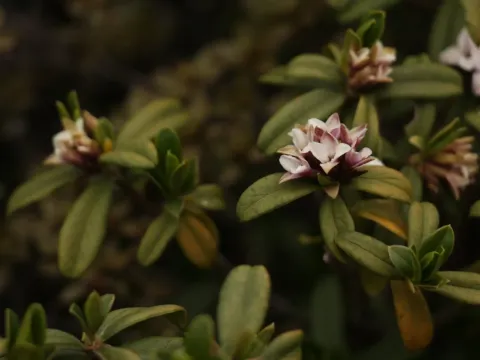
Daphne retusa
Daphne retusa
Daphne retusa is a slow-growing, evergreen shrub belonging to the Thymelaeaceae family. It is native to the high-altitude regions of Western China, typically found on rocky slopes and alpine meadows where the environment is cool and stable.
What the section contains
Daphne retusa
This crop requires well-drained, porous soil to thrive. It performs best in neutral to slightly acidic soils. Growers must ensure that the planting site has excellent drainage, as the root system is highly sensitive to waterlogging, which often leads to root rot.
Climate requirements for this species include cool temperatures and moderate light. While it tolerates full sun in cooler climates, it prefers partial shade in warmer regions to protect the foliage and root zone from extreme heat and desiccation.
The agrotechnical management of Daphne retusa focuses on minimal maintenance. Due to its naturally compact and rounded growth habit, pruning is rarely necessary. It is recommended to apply a layer of mulch to conserve soil moisture and regulate soil temperature.
In ornamental horticulture, this plant is highly prized for its evergreen foliage and clusters of fragrant, rose-purple flowers. It serves as an excellent structural plant in rock gardens and containers where soil conditions can be carefully managed.
The primary threats to Daphne retusa are fungal diseases such as Phytophthora root rot. These pathogens thrive in poorly drained soil, making consistent water management the most critical aspect of disease prevention.
Pests such as aphids and spider mites are common concerns during the growing season. Aphids target the new succulent growth, while spider mites often appear during dry, warm spells, causing leaves to yellow and lose their vitality.
Integrated pest management strategies should be employed, prioritizing the use of horticultural oils or systemic insecticides if infestations reach critical levels. Regular inspection of the undersides of leaves is recommended.
Viruses can occasionally infect the plant, resulting in foliage discoloration. There is no cure for such infections, so affected branches or entire plants should be removed and destroyed to prevent spread to healthy specimens.
Gardeners must exercise extreme caution, as all parts of the plant are poisonous. Protective equipment is essential when pruning or handling the shrub to prevent skin irritation or accidental ingestion of sap.