
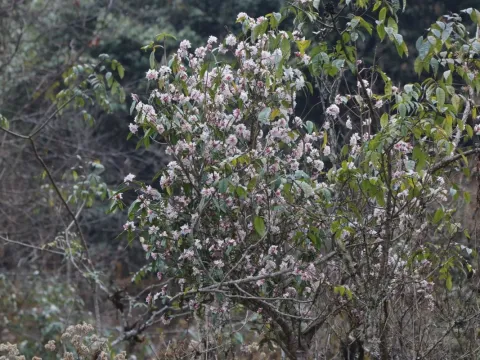
Daphne sureil
Daphne sureil
Daphne sureil is an evergreen shrub belonging to the Thymelaeaceae family. It is native to the mountainous regions of the Himalayas, where it thrives in cool, moist forest environments at significant elevations.
What the section contains
Daphne sureil
The plant requires well-draining, humus-rich soil to support its sensitive root system. Maintaining consistent moisture is crucial; however, waterlogging must be strictly avoided, as it often leads to rapid decay of the root network.
Regarding light conditions, this species prefers partial shade or dappled sunlight. Intense direct sun, especially in mid-summer, can stress the foliage and negatively impact the plant's overall growth rate and blooming potential.
Temperature management is a key aspect of its cultivation. Daphne sureil performs best in cool climates and does not tolerate extreme heat or prolonged drought. It is highly valued in botanical circles for its fragrant, clustered flowers.
While it is an attractive ornamental plant, it should be handled with caution. Like many plants in the Daphne genus, it contains toxins that can be harmful if ingested or handled without gloves, making it unsuitable for areas where children or pets are present.
The primary threats to Daphne sureil are fungal infections, particularly root rot, which are often exacerbated by poor drainage and excessive soil moisture. These diseases are difficult to treat once they become systemic.
Pests such as aphids and spider mites can attack the foliage during drier periods. Regular monitoring and appropriate environmental management, such as maintaining adequate air humidity, can help prevent significant infestations.
Powdery mildew can manifest on the leaves if the air circulation around the plant is insufficient. Improving plant spacing and ensuring good airflow are essential steps in managing this particular threat to the foliage.
Viral infections may occasionally occur, leading to stunted growth or discolored foliage. Because there are no effective cures for these viruses, infected plants should be removed and destroyed to prevent spreading.
Due to the naturally occurring toxic glycosides in its tissues, the plant is largely resistant to foraging by rabbits and deer. This natural defense mechanism is an important biological advantage in its native habitat.