
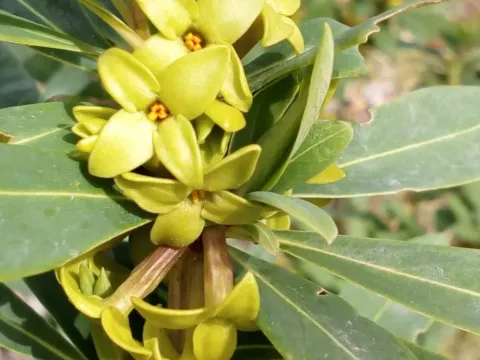
Daphne pseudomezereum
Daphne pseudomezereum
Daphne pseudomezereum is a distinctive species within the Thymelaeaceae family. This deciduous shrub is prized for its specific botanical structure and is often sought after by collectors interested in rare, temperate-zone ornamental plants.
What the section contains
Daphne pseudomezereum
The plant requires precise environmental conditions to thrive, preferring shaded or semi-shaded habitats. It mimics the natural forest floor environment, requiring protection from harsh, direct sunlight that can scorch its leaves and stress the root system.
Soil quality is paramount for this species. It demands a well-draining, slightly acidic to neutral substrate. Incorporation of organic matter, such as leaf mold, helps maintain the necessary soil structure and consistent moisture levels throughout the growing season.
When selecting a planting site, provide adequate space for air circulation to prevent stagnant conditions. While the plant is hardy in many climates, it benefits from a layer of mulch in winter to protect the soil from deep freezing and rapid temperature fluctuations.
Care must be exercised when handling this species, as it contains toxic compounds. Always wear protective gear during pruning or maintenance to prevent skin irritation or accidental ingestion of plant sap.
Fungal pathogens represent the primary threat to the health of Daphne pseudomezereum. Overwatering is the most common cause of root rot, which can prove fatal if not identified early in the vegetative cycle.
Insect pests, such as aphids and spider mites, are frequent visitors that can severely hamper plant growth. These pests extract vital fluids, leading to yellowing foliage and deformed growth if left unchecked.
Integrated pest management should focus on early detection. Regular inspection of the undersides of leaves allows for the timely application of organic or chemical control methods before an infestation becomes widespread.
For fungal issues, improving air drainage and adjusting the irrigation schedule are critical cultural practices. In severe cases, the application of specialized fungicides is necessary to save the plant structure.
Maintaining plant vigor through balanced nutrition and proper site selection reduces susceptibility to these threats. A healthy plant, grown in optimal conditions, demonstrates much greater resilience against common garden pests and diseases.