
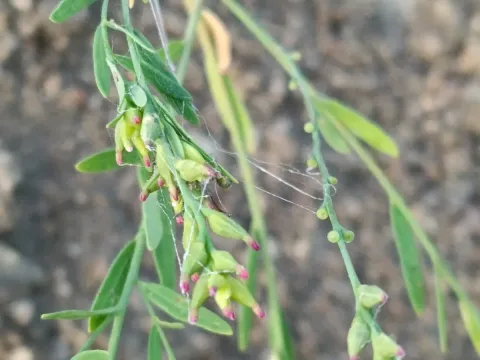
Diarthron
Diarthron
Diarthron, a member of the Thymelaeaceae family, is a specialized plant adapted to harsh arid environments. The timing of sowing is critical and is strictly governed by the seasonal moisture patterns typical of desert and semi-desert regions.
What the section contains


Diarthron
The ideal sowing window occurs immediately after snowmelt in the early spring. This allows the seeds to utilize the stored soil moisture, ensuring germination occurs before the arrival of intense heat and dry conditions.
Agronomists emphasize the importance of correct planting depth, which should be kept within 1-2 cm. Placing seeds too deep prevents emergence, while sowing on the soil surface leaves the seeds vulnerable to dehydration and heat stress.
Row planting is the recommended method to reduce competition for limited water resources. By maintaining proper spacing, the plants can better manage the transpiration-to-photosynthesis ratio in arid conditions.
Close monitoring during the seedling phase is essential for establishment. In years with insufficient precipitation, supplemental irrigation during the first few weeks can significantly increase the survival rate of the crop.
Diarthron is highly sensitive to soil aeration and does not tolerate waterlogged conditions. It thrives in well-drained sandy and loamy soils, which allow for optimal oxygen exchange with the roots in desert climates.
As a true xerophyte, the plant is remarkably efficient at managing its water balance during prolonged droughts. It can withstand high levels of solar radiation and extreme temperature fluctuations that would be lethal to most standard crops.
The plant is not overly demanding in terms of soil fertility, though it prefers neutral to slightly alkaline substrates. Its ability to tolerate moderate soil salinity is a significant advantage in regions where traditional agriculture is limited.
Environmental requirements include a need for significant diurnal temperature variations. These fluctuations are essential for the metabolic processes that govern the development of the plant's vegetative parts.
Protecting the field from wind erosion is a critical requirement for successful cultivation. Establishing windbreaks or using conservation tillage practices helps protect the young plants and the fragile soil structure they inhabit.
The biomass yield of Diarthron is generally low to moderate, as the plant prioritizes survival mechanisms and structural development over rapid growth. Its slow growth rate is a direct adaptation to the scarce resources of its habitat.
The peak biomass is typically achieved during the flowering stage. At this phase, the plant provides the most value, whether it is being utilized for light forage or as part of a wider ecosystem restoration project.
The primary utility of the crop is often found in its role as a phytomelioration tool. Its extensive root system is highly effective at stabilizing moving sands, providing ecological services that are more valuable than harvested tonnage.
Yield stability is improved through proper crop management, such as controlled density and minimal interference with the natural soil crust. Over-fertilization can actually be detrimental to the hardiness of the plant.
For perennial stands, productivity can be maintained for years if the plant density is managed correctly. Natural reseeding is often the most reliable method for maintaining population levels in large-scale restoration projects.
Pathogenic fungi are the primary threats to Diarthron, particularly during periods of uncharacteristic moisture or high humidity. Root rot caused by soil-borne pathogens can significantly reduce plant stand health.
Various insect pests represent a major threat, particularly those that feed on young shoots and foliage. These pests can reduce the plant's photosynthetic capacity, rendering it less capable of surviving the arid season.
Mechanical damage caused by boring insects provides an entry point for secondary bacterial infections. Such infections can lead to rapid wilting and the loss of entire sections of the crop within a very short period.
Weed competition is a significant concern during the establishment year. Aggressive invasive weeds can quickly outcompete young Diarthron plants for water and nutrients, leading to poor population establishment.
Effective management involves preventive measures, such as maintaining appropriate crop spacing to reduce pathogen spread. Integrated pest management strategies that utilize biological controls are preferred over broad-spectrum chemicals.