
Dirca
Dirca
Propagation of Dirca is primarily achieved through seeds which require cold stratification to break dormancy. Seeds should be sown in autumn immediately after collection as they lose viability rapidly if allowed to dry out.
What the section contains

Dirca
In a controlled environment, seeds should be kept in a moist, cool substrate at temperatures between 0 and 5 degrees Celsius. Germination may be slow and irregular, often taking several months to complete.
Vegetative propagation via layering is a more reliable method for many growers. By pinning down flexible branches and covering them with soil, one can encourage root development over the course of one or two growing seasons.
Cuttings are notoriously difficult to root. To improve success rates, softwood cuttings should be taken in late summer and treated with strong rooting hormones in a humid environment.
Transplanting established seedlings into the landscape should be timed for early spring. A site with rich, consistent moisture and protection from harsh afternoon sun is essential for initial establishment.
Dirca, a member of the Thymelaeaceae family, is a deciduous shrub native to moist woodlands in North America. It thrives in shaded environments where the soil remains consistently damp throughout the year.
The plant demands rich, organic, well-draining soil with a neutral to slightly acidic pH. Poor drainage is the most common cause of failure, as the root system is highly sensitive to waterlogged conditions.
Climate preferences include temperate conditions with mild summers. While Dirca is generally hardy, it benefits from mulch during winter to protect roots in regions experiencing significant frost and minimal snow cover.
Humidity is a critical factor for successful cultivation. If the surrounding environment is dry, the shrub will exhibit signs of stress, such as leaf scorch, which can be mitigated with regular irrigation.
Cultural maintenance involves layering organic mulch around the base of the plant to suppress weeds and maintain cool soil temperatures, which mimics the natural forest floor habitat.
Historically, the common name leatherwood refers to the extreme flexibility and strength of the branches, which were traditionally harvested by indigenous peoples for cordage and baskets.
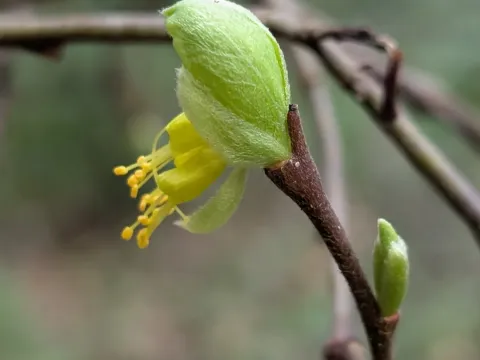
Modern usage is almost exclusively ornamental. Dirca is prized for its early spring blooms, which emerge as small yellow bells before the leaves appear, adding value to the early-season landscape.
Pruning should be kept to an absolute minimum to preserve the shrub's natural, graceful form. Any removal of wood should be done during the dormant season to avoid sap loss and stress.
The fruit, a small drupe, matures in late spring or early summer. While not edible for human consumption, it serves as an important food source for local bird populations.
Landscaping applications benefit from its slow growth rate, making it an excellent candidate for small gardens where an understory shrub with high aesthetic value is desired.
Dirca is relatively free from severe pest infestations. However, aphids can occasionally infest the soft new growth in spring, which can be managed with insecticidal soap if population density becomes high.
Root rot caused by Phytophthora species is the most significant disease threat. Proper site selection and avoiding heavy, clay-based soils that hold excessive water are primary preventative measures.
Mechanical injuries to the bark can create entry points for pathogens. When performing maintenance, clean tools are essential to minimize the risk of infection after pruning or accidental damage.
Poor air circulation may lead to fungal spots on leaves. This is often an indication that the plant is too densely surrounded by other vegetation, requiring selective thinning of the neighboring plants.
Winter damage from small mammals, such as voles or rabbits, can be a major issue for young plants. Physical guards or wire mesh around the base of the stems are highly recommended for winter protection.