
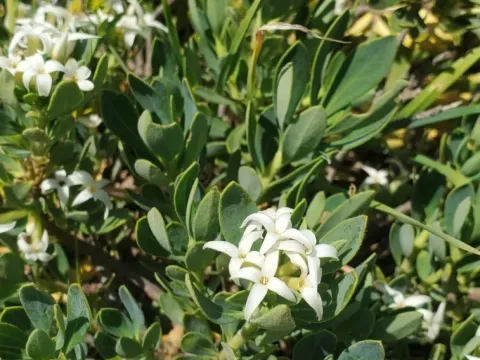
Daphne oleoides
Daphne oleoides
Daphne oleoides is a perennial evergreen or semi-evergreen shrub belonging to the Thymelaeaceae family. It is native to the mountainous regions of Southern Europe, the Caucasus, and parts of Western Asia, where it typically thrives on rocky slopes and calcareous soils.
What the section contains
Daphne oleoides
This shrub is recognized for its slow growth rate and dense, compact habit, usually reaching a height of 50 to 80 centimeters. The leaves are leathery and elliptical, resembling those of the oleander plant. The plant produces terminal inflorescences of fragrant, creamy-white or pale pink flowers during the spring season.
The agronomic requirements focus on soil drainage and chemical composition. Daphne oleoides requires well-aerated, neutral to slightly alkaline soil. Poorly drained conditions or heavy, waterlogged substrates are detrimental to its health, frequently leading to crown rot and poor root development in cultivation.
Environmental requirements include a temperate climate with moderate moisture levels. While the plant can withstand lower temperatures, it does not tolerate excessive winter dampness. It performs best in partial shade, where it is shielded from the intense heat of midday summer sun, which can dehydrate the foliage.
The primary use of this crop is in ornamental horticulture. Due to its limited scale and slow development, it is most frequently utilized in rock gardens, alpine collections, and specialized landscape designs. It provides year-round foliage interest and fragrant blooms, making it highly desirable for small, curated garden spaces.
The most common threats involve fungal infections caused by over-irrigation or inadequate drainage, leading to root rot and leaf spot. Proper site selection and careful monitoring of soil moisture levels are essential to prevent these issues from compromising the plant's health.
Pest pressures primarily include aphids and spider mites, which can infest the tender growth during dry, warm periods. Integrated pest management strategies, such as physical removal or the application of appropriate systemic insecticides, are recommended to maintain the aesthetic quality of the shrub.