
Edgeworthia
Edgeworthia
Edgeworthia is primarily propagated through cuttings or layering, as seed propagation is often unreliable and time-consuming. The best time for taking cuttings is late spring or early summer when the shoots are semi-hardwood.
What the section contains
Edgeworthia
To ensure successful rooting, a light, well-draining substrate rich in peat and perlite is required. Maintaining high humidity is critical, so cuttings should be placed under plastic or in a greenhouse environment.
Young plants should be transplanted into the field in the spring, once the threat of frost has passed. The root system is quite fragile, so transplanting using the transfer method (moving the entire root ball) is recommended to minimize stress.
The soil should be prepared by deep tilling and incorporating organic matter such as well-rotted compost. A spacing of at least 1.5 to 2 meters between plants is necessary to promote good airflow and minimize disease risks.
For commercial fiber production, planting density can be increased to maximize yields. However, this approach requires an intensive irrigation schedule and frequent fertilization to ensure the shoots grow long and vigorous.
Edgeworthia, a member of the Thymelaeaceae family, is a deciduous shrub native to China and the Himalayas. It requires a location protected from strong, drying winds to achieve optimal growth and health.
The plant thrives in acidic to slightly acidic, humus-rich soil. Excellent drainage is non-negotiable, as waterlogged soil quickly causes root rot, which is the most common cause of plant failure in agricultural settings.
The ideal temperature range for Edgeworthia is between 15 and 25 degrees Celsius. While it can tolerate light frosts, prolonged exposure to temperatures below -10 degrees Celsius can damage the flower buds and tender branches.
Regular, moderate watering is essential. The soil should be kept consistently moist but never saturated. Mulching the base of the shrub helps retain soil moisture and protects the shallow root system from extreme temperature fluctuations.
Edgeworthia prefers filtered or dappled light. Direct afternoon sun can scorch the leaves and stunt growth. Planting the shrub on the eastern or western side of a building or under a canopy of light trees provides the best protection.
The main commercial product of Edgeworthia is the inner bark, which is highly valued for producing high-quality Japanese paper known as "mitsumata." This paper is renowned for its strength, durability, and smooth texture.
Yield depends heavily on the vigor of the annual shoots. Systematic pruning is essential to stimulate the development of long, straight branches, which contain the best quality fibers for papermaking.
Harvesting usually begins when the plant reaches 3 to 4 years of age. At this stage, the branches have matured enough to provide a high volume of cellulose fiber without compromising the overall health of the shrub.
The processing of the bark involves steaming, stripping, and thorough cleaning of the fibers. This mechanical and thermal processing results in a high-quality pulp used for calligraphy, conservation work, and specialty printing.
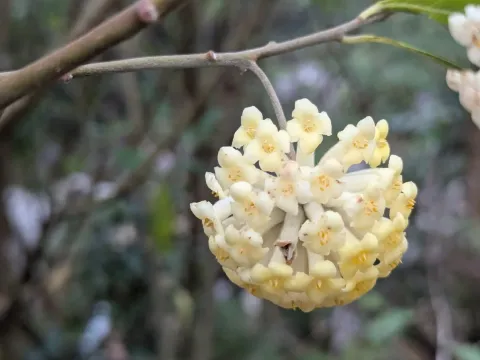
In ornamental settings, the "yield" is measured by the quality of its late-winter blossoms. A well-tended shrub produces numerous fragrant, yellow flower clusters, which are highly prized for their early blooming and aesthetic appeal.
Edgeworthia is generally hardy, but poor cultural practices can lead to fungal infections. Powdery mildew is a common concern, especially in conditions of high humidity and poor air circulation around the foliage.
Root rot is the most serious threat to this crop. It is typically caused by overwatering or planting in heavy, clay-based soils that do not drain properly, leading to the rapid decay of the vascular system.
Pests like aphids and spider mites can attack the succulent young shoots. These pests feed on plant sap, causing leaf deformation and weakening the shrub, making it more susceptible to environmental stress.
Integrated pest management, including the use of systemic insecticides, is recommended when pest populations exceed economic thresholds. Preventive fungicide sprays at the start of the season can help suppress fungal pathogens.
Sanitation is a critical defensive measure. Removing damaged, dead, or diseased wood during the dormant season prevents the buildup of pathogen spores and ensures that the plant directs its energy toward healthy, productive growth.
Harvesting the bark of Edgeworthia is a winter operation conducted while the plant is dormant. During this state, sap flow is low, which makes the bark easier to separate from the woody core of the stems.
Branches are cut at the base using sharp pruning shears. Clean, angled cuts are vital to prevent moisture pooling on the stump, which could otherwise lead to rot or frost-related tissue damage during the coldest months.
After harvesting, the branches are steamed to facilitate the stripping process. The harvested bark is then dried in a shaded, well-ventilated area to preserve the integrity of the fibers and prevent UV-related degradation.
The bark is then graded by quality, with the cleanest, lightest-colored strips reserved for high-end paper products. Any residues are often composted to return nutrients back to the agricultural field.
Post-harvest care involves fertilizing and proper irrigation in the spring. This encourages the plant to regenerate rapidly, ensuring that a robust crop of new shoots will be available for harvest in the subsequent cycle.